Hospitals are being built and renovated all across the country -- a trend responding to the aging baby boomer population.


"Wherever you turn, there are signs of a remarkable surge in hospital construction."
"In an article in Hospitals & Health Networks Magazine, Dave Carpenter reported:"
"'The most significant expansion and replacement of U.S. hospitals since the post-World War II building spree continues to fuel a red-hot construction market. With hundreds of additional projects in the planning stages, it's a trend that's expected to last through the rest of the decade. ... The Sun Belt no longer dominates the action -- the second wave of construction activity has spread to every region. ... [Nationwide] new hospitals and clinics valued at $22 billion were under construction as of late 2005. ... Underpinning it all is increased consumer demand, especially as the first of the 77 million baby boomers turn 60 this year.'"
"For cities and towns, it's a tough dilemma. No one wants to drive up costs, but there's legitimate concern -- especially in smaller cities and towns -- about the consequences of losing their hospital, or not having a strong medical facility that will help attract businesses and meet the demands of the baby-boom generation and others."
Read the full story: Hospital Boom(ers)

A South Dakota hospital is funding a new subdivision for its employees
Some employees see investing in housing as the only way to stem the loss of workers moving away due to high housing costs.

Home Prices are Stabilizing. Will it Last?
Housing costs are growing at a slower rate than in recent years, but experts say significant home price reductions won’t happen in the short term.
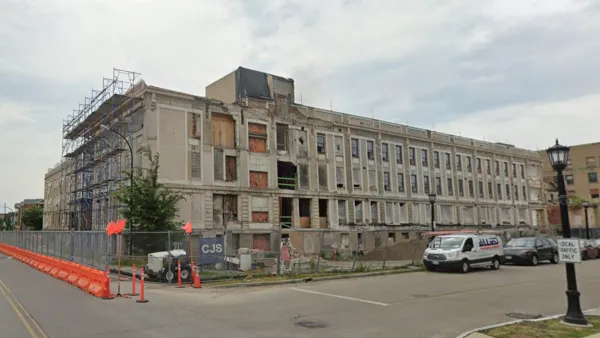
Buffalo Hospital to Become 80 Housing Units
The former Millard Fillmore Gates Circle hospital building is part of a larger development aimed at bringing affordable housing to western New York.

Planetizen Federal Action Tracker
A weekly monitor of how Trump’s orders and actions are impacting planners and planning in America.

Eastern Nebraska is running out of electricity
Data centers and electrification are straining eastern Nebraska’s grid, throttling economic development.

Study reveals best places in the U.S. for cycling, walking
New research from Streetlight Data examines bicycle and pedestrian miles per capita in the 100 largest U.S. cities by population.

DSA members accuse Mamdani of 'abandoning values' over housing redevelopment
New York City's mayor plans to replace about 2,000 units of public housing with private, mixed-income housing.

All sides of BRT debate unhappy with CDOT’s most recent move
The Colorado Department of Transportation is no longer considering center-running bus lanes for Colorado Boulevard.

Massachusetts bogs generate both power, and cranberries
Putting solar panels above farmland is one way Massachusetts is advancing toward its goal of net-zero carbon emissions by 2050.

FREE Course: Walkable City 1: Why Walkability?
After describing his path towards focusing on walkability as the essence of good planning, Jeff Speck marches through his five principal reasons for making more walkable places.
Reinventing Malls: Planning Alchemy—Turning Gray Fields Into Gold
The course focuses on the opportunities and imperatives that shape reinvention of mall sites.

City of Rosemead
Rutgers University, Edward J. Bloustein School of Planning and Public Policy
One Hundred Miles
University of Michigan School for Environment and Sustainability (SEAS)
Hunter College, City University of New York (CUNY)
The Architects Foundation
City of Cambridge
The Pocatello Development Authority
The Urban Renewal Agency of the City of Pocatello