James Howard Kunstler reflects on how the housing crisis fallout will affect American society in an election year.


"The housing debacle...is the end of the suburban phase of US history. We won't be building anymore of it, and those employed in its development will have to find something else to do. Now, unfortunately the whole point of the housing bubble was not really to put X-million people in so many vinyl and chipboard boxes, but rather to ramp up a suburban sprawl-building industry as a replacement for America's dwindling manufacturing economy. This stratagem ran into the implacable force of Peak Oil, which not only puts the schnitz on America's whole Happy Motoring / suburban nexus, but implies a pervasive trend for contraction in everything from the daily distances we can travel to the the very core idea of regular economic growth per se -- at least in the way we have understood it through the age of industrial capital."
"By the way, the housing collapse was only one phase of a more generalized real estate debacle, because the commercial side of the business has also begun a nauseating slide into non-performance and equity destruction. In other words, we built way too many strip malls, power centers, and office parks. God knows what will happen to the owners of these white elephants, or the mortgage and lien holders of these things -- but as one wag remarked to me some years ago as we both gazed upon a forlorn abandoned strip mall outside of Tulsa, '...we don't need that many evangelical roller rinks....'"
"What happens out there on the housing market scene will certainly redound in banking and finance and whatever still constitutes the US economy generally."
"The charade of permanent prosperity based on getting something for nothing is over. That sound you hear out there is reality knocking on the door. It has been standing out in the cold for a long time and it is not happy with us."
Read the full story: Forecast for 2008


Planetizen Federal Action Tracker
A weekly monitor of how Trump’s orders and actions are impacting planners and planning in America.

‘Going backwards:’ Baltimore mayor, students rally against state's transit funding plan
Maryland's proposed six-year plan provides no funding for Baltimore’s BMORE bus program and reduces its road maintenance funding.
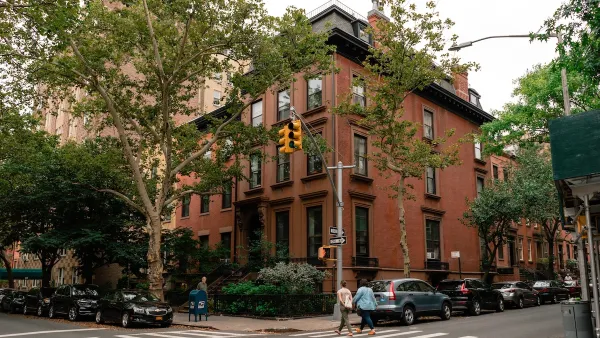
Mamdani sent nearly 6,000 pied-à-terre tax warnings to homes that didn’t qualify
A judge has ordered the administration to cancel thousands of pied-à-terre tax notices after it sent 35% of them erroneously.

Newsom vetoes high-speed rail supervision bill after agency receives condemnatory audit
The audit found the CHSRA approved almost $600,000 in unallowable travel expenses.

Nation sees first electric plane-boat hybrid take off in public demo
The Viceroy Seaglider can fly at speeds of 180mph for up to 180 miles.

One of nation’s poorest counties to receive $6 billion data center
The developers estimate the project will create 200 permanent jobs and 1,000 temporary construction jobs.

FREE Course: Walkable City 1: Why Walkability?
After describing his path towards focusing on walkability as the essence of good planning, Jeff Speck marches through his five principal reasons for making more walkable places.
Reinventing Malls: Planning Alchemy—Turning Gray Fields Into Gold
The course focuses on the opportunities and imperatives that shape reinvention of mall sites.

City of Thousand Oaks
City of Wisconsin Rapids
Harvard University Graduate School of Design
The Architects Foundation
University of Cincinnati Online
Northern Illinois Transit Authority (NITA)
The Pocatello Development Authority
The Urban Renewal Agency of the City of Pocatello