The countless issues and debates about the nature of city-building need powerful voices within the broader public.
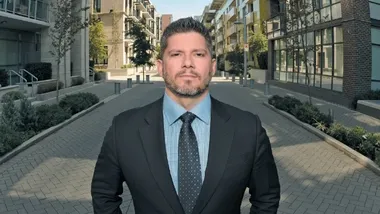


These days, there are many important city-building issues we're promoting here in Vancouver. The first of which is always sustainability, and particularly ecological sustainability (its difficult to consider an economic or socially sustainable future, if the powerful changes necessary to truly address climate change and other ecological implications do not happen).
But beneath (or within) sustainability, there are countless issues and debates about the nature of city-building that need to have powerful voices, particularly within the broader public (as opposed to us converted). One that I'm pleased to see gaining more and more traction and attention, in the popular media and in dinner party chats around cities, is the critical importance of beauty in the work that we do. The tide is turning on this issue, when publications like Canadian Business are trumpeting the value added nature of design, and the power of "pretty cities" to economic success.
In planning circles though, we still seem too loathe to use the word beauty. Too subjective, perhaps? For whatever reason, you'd be hard-pressed to find the word in most planning visions and documents, and that's a shame.
During my 6 years planning for the City of Calgary, Alberta before coming here to Vancouver, I tried to change that. In the fastest growing, "private sector" new economic engine of Canada, I tried to make the business case for beauty, in the corridors of City Hall, and more importantly, within the hearts and minds of the public. I can't say it was a complete success, but I'm optimistic that when joined with other voices that were speaking up on similar issues, the ball started rolling and is heading in the right direction in that dynamic city.
I'm pleased now to be in Vancouver, a city that takes its beauty seriously, both human-built and natural. But so many North American cities need to do so as well, and we need to be a voice in making that happen.
So to show at least one way of sparking dialogue and debate, I've dusted off and attached below an old editorial I wrote on November 27th, 2005 for Calgary's key newspaper when I was Manager of Centre City Planning and Design for that city. I can't say it changed the world, but it did seem to get a lot of people talking for a week or two, and the feedback I got was very encouraging. You never know how that kind of discussion can land. You'll also notice a personal touch to the piece . A slightly scary thing to be putting out there to the public in the middle of a significant personal health crisis (which I've since beaten). And yet I realized after, the personal touch is such a key part in helping people see things differently (which, I constantly insist, is as important a part of our work as writing plans or drawing designs).
I encourage all of you to think about writing such pieces for your local papers. Beauty will be important when the media is writing about it, people are talking about it, and the politicians are demanding it!
Great cities need beauty
Calgary Herald, November 27th, 2005
Brent ToderianThose passionate about the beauty of cities, their planning and design, their architecture, their art, often speak of the time when their eyes were first "opened."
Maybe it was at a young age or during school, on a life-changing trip, or reading an inspiring book. Whatever did it, the common result is that once opened to the beauty of well-designed cities – the "angels in the architecture" – our eyes can't be closed again. This can make us a challenge to be around, as our eyes constantly look around and upward, noticing, pointing, constantly commenting on what we see. Our friends and loved ones get used to it and, after a while, just smile and nod a lot.
For me, my eyes were opened twice. The first seemed powerful at the time, while taking in some of the best streets and building designs in North America, and reading life-changing books such as Christopher Alexander's A Pattern Language, Allan Jacob's Great Streets and William Whyte's City: Rediscovering the Centre.
Having my eyes opened gave me a passion for city-building that has led to a career and a life that I truly love.
The second time was harder, and had a much more profound impact on the way I see a city's beauty. At the age of 27 the retina in one of my eyes detached and, during many surgeries with serious implications, I learned that genetically speaking, I have ‘old man's eyes.' While getting used to seeing the city through mostly one eye, and with the understanding that the same could happen any day to the other eye as well, I had plenty of time to rethink the value of what we see every day.
Among other important revelations on what's truly important, never since have I taken for granted the value of beauty in a city. Good cities need infrastructure, efficiency and economic activity, and smart cities give equally strong attention to sustainability, arts and culture, and social compassion. But great cities need more than that. They need beauty.
They need to inspire creativity, energy and affection for the place we live in, through that beauty. They need buildings, streets and places that move us, that inspire us to be more creative and civil. They need beauty that makes us fall in love with where we live. As is true with anything we love, we'll be unable to watch our city being treated badly.
Does beauty mean things have to be more expensive? Not necessarily, if we're clever (besides, it's amazing how expensive ugly can be). Does beauty pay dividends for a smart city? Of course. The economic spin-offs in private sector re-investment and the resulting municipal tax generation are proven, and in fact beauty has a better track record of return on investment than ugly does.
It's good for business, for quality of life, and for attraction of creative industries and people. Is beauty in the eye of the beholder? Absolutely, but so what? Even the discussion of what is beautiful in a city as wealthy, energetic and creative as Calgary, is worthwhile. People may not agree, and that's the beauty of it. But we'll be having a great conversation.
Calgary has recently made strong strides as we near a million people, to put design excellence at the forefront. The Mayor's Urban Design Awards, the City's new Urban Design Advisory Panel, new visions and projects, all are steps in the right direction. But so far we're still shying away from the "B-word" – perhaps for some, beauty as a benchmark still seems too subjective, too soft, at least in terms of what we're building (references to natural beauty seem to be OK). We have a tremendous opportunity though, to make a concept like beauty powerful and meaningful in our civic dialogue, in our city-building, and most importantly, in our politics.
Other cities around the world have done so for generations, and have the good looks to show for it.
Calgarians can do this. We can cry out for better, and debate what better means. We can call for more edgy, creative, beautiful architecture and public places. We can support the value of art across our cityscape.
We can demand that infrastructure be thought of as architecture, as it was when the Centre Street Bridge was first conceived.
It starts with appreciation and perspective. I'm betting Calgarians don't need the threat of vision-loss to see with new eyes the beauty that could be all around them.
Earlier this year, at 36, my greatest fear happened and more surgeries have been needed to keep my vision. They're not over yet. Every day I look out my window, appreciate the beauty in the city we have, picture the truly beautiful city Calgary could be, and think about what it will take to get us there.

Can We Still Create Beautiful Cities?
Edwin Heathcote looks at "fumbling attempts at creating new forms of urbanity" and "new ideals of beauty" in cities like Milton Keynes, Rotterdam, and Dubai, and asks if we can still create urban beauty, or if it's even desirable in the first place.
The City: Beautiful?
Is it okay yet to talk about cities and beauty in the same breath? Teacher Karrie Jacobs finds an astonishing lack of reading material for her class on aesthetic beauty and the built environment.
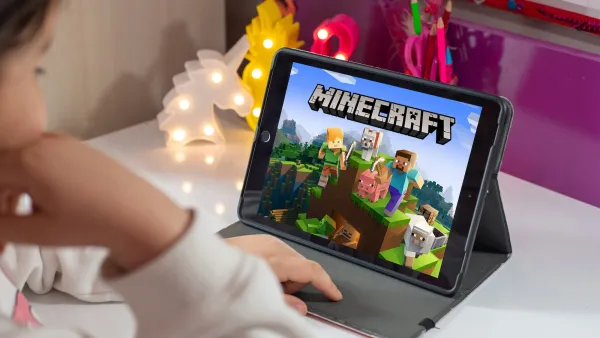
Children in 55 countries are redesigning their cities in Minecraft
A U.N.-backed program lets students and community members reimagine sites in their neighborhoods in the game — and translate them into real-life buildings.

Planetizen Federal Action Tracker
A weekly monitor of how Trump’s orders and actions are impacting planners and planning in America.

Northwest rail fans eager for Sept. 30 debut of Amtrak’s Airo fleet
Get ready for that new train smell and more seats. But they won’t go faster or run more frequently on the Cascades route in Washington and Oregon.
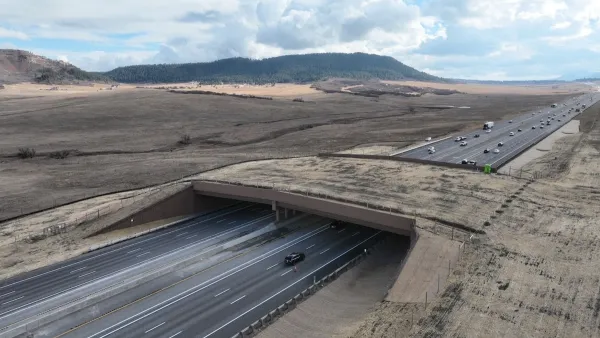
Record-breaking wildlife overpass in Colorado brings 91% reduction in animal collisions
Prior to the overpass, vehicles were hitting one deer per day on Colorado’s Interstate 25.

Detroit to transform waterfront with $2.2 billion investment
Developers will convert about 18 acres of unused parking lot space into civic spaces.

‘Going backwards:’ Baltimore mayor, students rally against state's transit funding plan
Maryland's proposed six-year plan provides no funding for Baltimore’s BMORE bus program and reduces its road maintenance funding.

Trump wants to cancel nearly 98% of funding for HUD housing support program
Multiple housing groups are suing the administration in an effort to preserve the funding.

FREE Course: Walkable City 1: Why Walkability?
After describing his path towards focusing on walkability as the essence of good planning, Jeff Speck marches through his five principal reasons for making more walkable places.
Reinventing Malls: Planning Alchemy—Turning Gray Fields Into Gold
The course focuses on the opportunities and imperatives that shape reinvention of mall sites.

City of Thousand Oaks
City of Wisconsin Rapids
Harvard University Graduate School of Design
The Architects Foundation
University of Cincinnati Online
Northern Illinois Transit Authority (NITA)
The Pocatello Development Authority
The Urban Renewal Agency of the City of Pocatello

