This week, the Economist’s cover story, "The trouble with the housing market," details the downward-spiraling "subprime" mortgage market and its potential effects on the U.S. economy. The collapsing market certainly poses problems to Wall Street traders and taxpayers in general, but what about the physical toll it's taking on our cities? Abandoned, foreclosed homes now increasingly dot the nation's inner ring suburbs, helping spread neighborhood decline out from inner cities, while developers build more homes farther into the urban periphery.


This week, the Economist's cover story, "The trouble with the housing market," details the downward-spiraling "subprime" mortgage market and its potential effects on the U.S. economy. The collapsing market certainly poses problems to Wall Street traders and taxpayers in general, but what about the physical toll it's taking on our cities? Abandoned, foreclosed homes now increasingly dot the nation's inner ring suburbs, helping spread neighborhood decline out from inner cities, while developers build more homes farther into the urban periphery.
After a long history of redlining (denying loans to poorer people due to perceived greater risks), banks, spurred in part by the Community Reinvestment Act of 1977, began to make more of these "subprime" loans to people with little savings or poor credit histories, albeit conservatively. As the housing market heated up, however, more banks and other "financial services" companies got in on the action, sometimes making predatory loans with low initial interest and little money down to families dreaming of homeownership. Many innocent investors unwittingly buried themselves in debt, and some found themselves homeless, as deal terms initially glossed over by lenders turned into huge interest rates, leading to foreclosures (see for example this foreclosure blog referenced in the Economist).
The New York Times has been tracking the phenomenon, and a recent story detailed the startling impact of home foreclosures on suburban Cleveland. In Cuyahoga County, the rate of foreclosures went from 2,500 in 1995 to 15,000 in 2006. One county official estimates that 10,000 of the city's 84,000 single-family homes are abandoned. The county has actually taken to maintaining the empty houses - mowing the lawns, installing security systems - to discourage vandalism and prevent drug havens from forming as the area approaches the tipping point toward decline.
Meanwhile, the accounting scandal at Fannie Mae, the largest mortgage lender in the country, has recently trickled down to its charitable organization, the Fannie Mae Foundation, which on February 23 announced that it will close by the end of April. Over the past 25-plus years, in addition to granting tens of millions of dollars to housing-related initiatives - including its ubiquitous mortgage education program - the foundation sponsored the academic journal Housing Policy Debate, one of the preeminent publications in the field of affordable housing. Now back issues have been taken down from the foundation website, and the future of both the journal and the mortgage education programs is highly uncertain.
So, while politicians from both parties continue to tout the doctrine of homeownership - what might be considered the only consistent and unified "urban policy" of the federal government - more lending institutions are duping Americans into buying homes on unstable terms. The demand for single-family homes pulls more families farther and farther into sprawling urban regions, emptying out inner cities, and now, more often, inner suburbs - traditionally due to greater land availability, and now caused in part by foreclosures. While homeownership is a worthy goal, theoretically increasing owners' stake in their communities while providing financial security, Congress needs to crack down on predatory lending (some efforts are being made) while supporting continued education and scholarship about affordable housing, which has taken a hit with the Fannie Mae Foundation's closure. And instead of myopically focusing on homeownership, HUD and the White House should take a more holistic approach to urban planning, increasing funding to successful, broader programs like the Community Development Block Grant, instead of letting the private housing market dictate the shape of our nation's cities and suburbs.

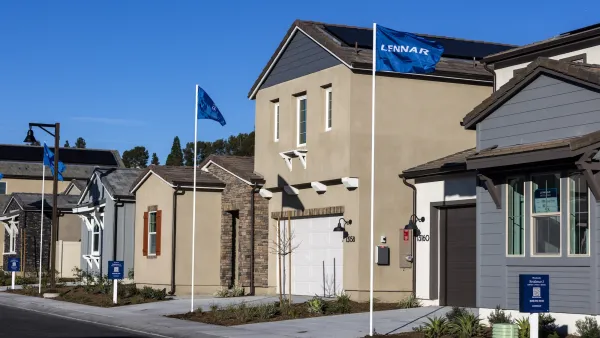
Just 17% of San Diego households can afford the city's $1M+ median home prices
The city is becoming increasingly unaffordable to prospective homebuyers.
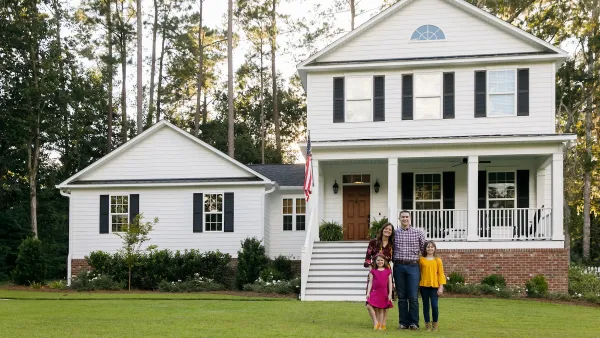
Report: Housing is becoming an 'inherited advantage'
As housing costs soar, buying a home is becoming unaffordable to a large swath of American families.
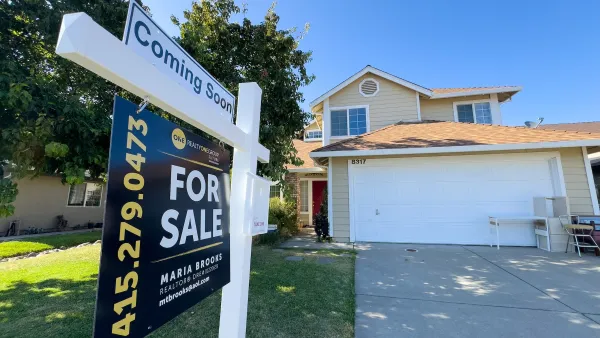
'Starter' homes cost over $1M in 242 US cities
Once concentrated in coastal regions, cities with starter homes valued at over $1 million are now spread across 26 states.

Planetizen Federal Action Tracker
A weekly monitor of how Trump’s orders and actions are impacting planners and planning in America.

Northwest rail fans eager for Sept. 30 debut of Amtrak’s Airo fleet
Get ready for that new train smell and more seats. But they won’t go faster or run more frequently on the Cascades route in Washington and Oregon.

Record-breaking wildlife overpass in Colorado brings 91% reduction in animal collisions
Prior to the overpass, vehicles were hitting one deer per day on Colorado’s Interstate 25.

Detroit to transform waterfront with $2.2 billion investment
Developers will convert about 18 acres of unused parking lot space into civic spaces.

‘Going backwards:’ Baltimore mayor, students rally against state's transit funding plan
Maryland's proposed six-year plan provides no funding for Baltimore’s BMORE bus program and reduces its road maintenance funding.

Trump wants to cancel nearly 98% of funding for HUD housing support program
Multiple housing groups are suing the administration in an effort to preserve the funding.

FREE Course: Walkable City 1: Why Walkability?
After describing his path towards focusing on walkability as the essence of good planning, Jeff Speck marches through his five principal reasons for making more walkable places.
Reinventing Malls: Planning Alchemy—Turning Gray Fields Into Gold
The course focuses on the opportunities and imperatives that shape reinvention of mall sites.

City of Thousand Oaks
City of Wisconsin Rapids
Harvard University Graduate School of Design
The Architects Foundation
University of Cincinnati Online
Northern Illinois Transit Authority (NITA)
The Pocatello Development Authority
The Urban Renewal Agency of the City of Pocatello

