


























In a stunning blow to big business in California, Gov. Schwarzenegger carved an agreement with the Democratic legislature to sign a landmark bill that will require a 25 percent reduction in greenhouse gas emissions by 2020 -- the first in the nation.


"Although the deal in California is strongly opposed by Republicans in the Legislature and many business leaders across the state, it assures that a bill on the restrictions will be passed before the legislative session ends Thursday and will be signed by Mr. Schwarzenegger."
"The first major controls are scheduled to begin in 2012, with the aim of reducing the emissions to their level in 1990. The legislation allows for incentives to businesses to help reach the goals, but opponents warn that the state may be sacrificing its economic interests for a quixotic goal."
“If our manufacturers leave, whether for North Carolina or China, and they take their greenhouse gases with them, we might not have solved the problem but exacerbated it instead,†said Allan Zaremberg, the president of the state’s Chamber of Commerce.
The Assembly speaker, Fabian Núñez, who sponsored the bill along with Assemblywoman Fran Pavley, called Wednesday the "most important day of my legislative career."
"The deal on Wednesday on the emissions legislation nearly foundered at least three times in the past week as Mr. Schwarzenegger’s negotiators reached seeming impasses with the Legislature over important issues: whether the bill would require the creation of market mechanisms like emissions credits to help industries meet the new standards; how broad to make exemptions during emergencies like the state’s electricity crisis six years ago, and how to administer and enforce the law."
"Ralph Cavanagh, the co-director of the energy program of the Natural Resources Defense Council, said in a telephone interview: “This is not an act of altruism. This is an act of enlightened self-interest. By accelerating the effort to reduce global warming pollution, California will benefit its own economy and environment and in so doing will set the best possible example for other states and nations.â€
FULL STORY: Officials Reach California Deal to Cut Emissions

Planetizen Federal Action Tracker
A weekly monitor of how Trump’s orders and actions are impacting planners and planning in America.

Restaurant Patios Were a Pandemic Win — Why Were They so Hard to Keep?
Social distancing requirements and changes in travel patterns prompted cities to pilot new uses for street and sidewalk space. Then it got complicated.
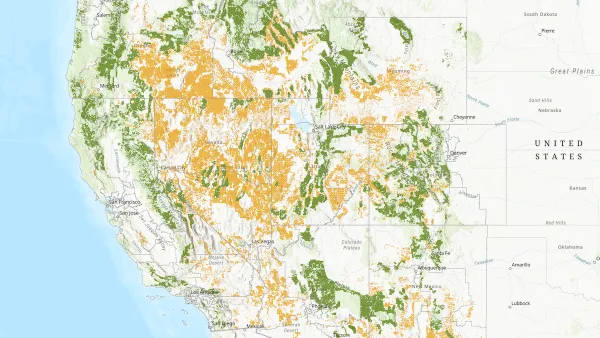
Map: Where Senate Republicans Want to Sell Your Public Lands
For public land advocates, the Senate Republicans’ proposal to sell millions of acres of public land in the West is “the biggest fight of their careers.”

Maui's Vacation Rental Debate Turns Ugly
Verbal attacks, misinformation campaigns and fistfights plague a high-stakes debate to convert thousands of vacation rentals into long-term housing.

San Francisco Suspends Traffic Calming Amidst Record Deaths
Citing “a challenging fiscal landscape,” the city will cease the program on the heels of 42 traffic deaths, including 24 pedestrians.

California Homeless Arrests, Citations Spike After Ruling
An investigation reveals that anti-homeless actions increased up to 500% after Grants Pass v. Johnson — even in cities claiming no policy change.

Urban Design for Planners 1: Software Tools
This six-course series explores essential urban design concepts using open source software and equips planners with the tools they need to participate fully in the urban design process.
Planning for Universal Design
Learn the tools for implementing Universal Design in planning regulations.

Heyer Gruel & Associates PA
JM Goldson LLC
Custer County Colorado
City of Camden Redevelopment Agency
City of Astoria
Transportation Research & Education Center (TREC) at Portland State University
Camden Redevelopment Agency
City of Claremont
Municipality of Princeton (NJ)