Three months ago Gov. Schwarzenegger announced a landmark $222 billion plan to invest in California's infrastructure. Yet the state legislature has dealt a blow to crumbling bridges and congested freeways by failing to agree on a bond measure to fund it.


"A significant amount of money included in the proposed bond just hours before legislative adjournment would have gone to the maintenance of the state transportation system. We have a $300 billion asset in our transportation system -- it makes good sense to try to maintain what we have as well as provide for mobility and congestion relief today and in the future -- and we lost money that would have gone to pay for the maintenance, safety, and upkeep of our existing system."
"To be blunt, we’re all just in shock that an issue of such critical importance to people throughout the state is dead in the water. Based on what other states, and even nations, have done to provide for their citizen’s environment and economy, what is unacceptable is what didn’t happen on March 15th."
"The coverage here in Southern California never really focused on what was at stake. It focused on 'who is this important to?' and why it was important to them from a political standpoint, but it really never talked about what the opportunity was and how depleted the transportation coffers have been over the last four or five years. Here we rank in the top five or six in the world economy, but we rank 49th among the 50 states in transportation spending and delivery. Come on! -- this was a story about you and me and every other Californian. Not just our commute, our congestion, our air quality and environment, but our children's."
"Today, the LAEDC Transportation Committee voted unanimously to recommend forming a '3-15 Commission' to both diagnose the system failure and prescribe a realistic plan for placing a comprehensive bond package on the November ballot. A 3-15 Commission must be positive, and prescriptive on substance. It also must demystify the legislative process and press for reform of state governance to encourage consensus."
Thanks to Josh Stephens
Read the full story: No Infrastructure Bond a 'Capitol Crime;' '3-15 Commission' Needed to Investigate


Planetizen Federal Action Tracker
A weekly monitor of how Trump’s orders and actions are impacting planners and planning in America.

Data reveals that NYC’s bet on congestion pricing has paid off
After almost two years of the program, reports show positive impacts on traffic and air quality and no disruptions to parking.
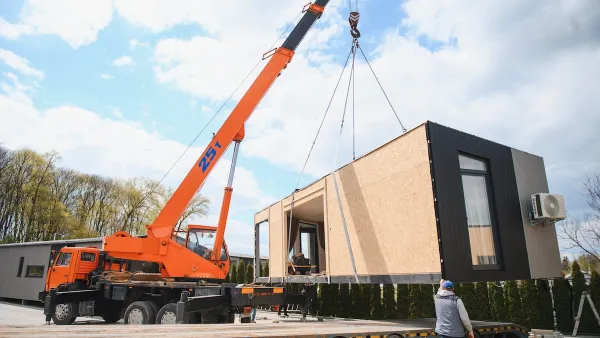
HUD modernizes 50-year-old manufactured housing framework
The Next Generation Manufactured Housing Action Plan establishes new energy-efficiency standards for manufactured homes, and new guidelines for anchoring them.

Florida could lose billions in funding for infrastructure, parks
If Amendment 3 passes, Miami-Dade would lose about $445 million annually by fiscal year 2028-29.

New Mexico spent millions drafting climate goals. Data centers are unraveling them
Three data centers in New Mexico and El Paso will release more emissions yearly than 2 million cars in the same timeframe.

This Ohio town is using AI to speed up transit analysis
The Greater Dayton Regional Transit Authority’s new AI tool correctly determined riders’ preferred ways to reach key commuter routes.

FREE Course: Walkable City 1: Why Walkability?
After describing his path towards focusing on walkability as the essence of good planning, Jeff Speck marches through his five principal reasons for making more walkable places.
Reinventing Malls: Planning Alchemy—Turning Gray Fields Into Gold
The course focuses on the opportunities and imperatives that shape reinvention of mall sites.

Rutgers University, Edward J. Bloustein School of Planning and Public Policy
One Hundred Miles
County of Mendocino
The Architects Foundation
University of Cincinnati Online
Montrose County
Northern Illinois Transit Authority (NITA)
The Pocatello Development Authority