Mayor John Street's Wireless Philadelphia initiative aims to provided high-speed Internet access across the city. Critics see a 'virtual quagmire'.


Today municipal Wi-Fi networks carry the same cachet as swanky sports stadiums and convention centers. Cities are betting big bucks that low-cost Web access will attract tech-savvy businesses, encourage tourism and project a hip image capable of wooing young professionals.
...Urban planner Scott Page [Editor's note: Scott Page is also contributes to the Planetizen Tech Talk blog] says it's naive to believe Wi-Fi is a practical tool for attracting young professionals. 'I'm not going to move to Philadelphia because it has Wi-Fi. People move because of social and business contacts.'
Page, who developed a technology plan for North Philadelphia, champions the broad Wi-Fi initiative. But he hopes the city will perceive wireless technology 'as an opportunity to reinforce what's unique about our neighborhoods--and not homogenize our city.' "
Thanks to Chris Steins
Read the full story: Down to the Wire

Planetizen Federal Action Tracker
A weekly monitor of how Trump’s orders and actions are impacting planners and planning in America.

Eastern Nebraska is running out of electricity
Data centers and electrification are straining eastern Nebraska’s grid, throttling economic development.
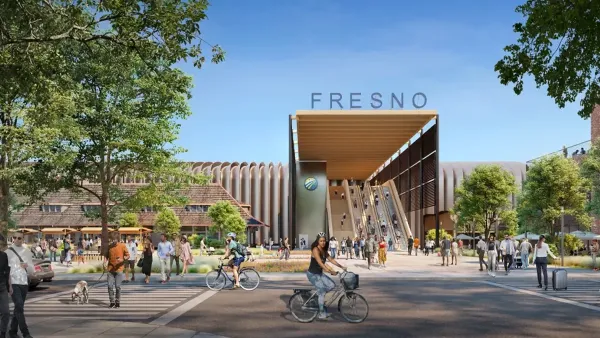
California High-Speed Rail Authority picks trainset manufacturer
The California High-Speed Rail Authority aims to start servicing passengers by 2033.

Massachusetts bogs generate both power, and cranberries
Putting solar panels above farmland is one way Massachusetts is advancing toward its goal of net-zero carbon emissions by 2050.

What could the future of LA transit look like under Raman?
The mayor-elect views broken sidewalks and potholes as crises that can be fixed with better governance.

States are counting on battery farms. Some towns don’t want them.
While fire safety has improved, some communities are still wary.

FREE Course: Walkable City 1: Why Walkability?
After describing his path towards focusing on walkability as the essence of good planning, Jeff Speck marches through his five principal reasons for making more walkable places.
Reinventing Malls: Planning Alchemy—Turning Gray Fields Into Gold
The course focuses on the opportunities and imperatives that shape reinvention of mall sites.

City of Rosemead
Rutgers University, Edward J. Bloustein School of Planning and Public Policy
One Hundred Miles
University of Michigan School for Environment and Sustainability (SEAS)
Hunter College, City University of New York (CUNY)
The Architects Foundation
City of Cambridge
The Pocatello Development Authority
The Urban Renewal Agency of the City of Pocatello