Will smart growth result in more traffic congestion and air pollution? Wendell Cox presents the argument for sprawl and against urban 'smart growth' development.


 Over the past 50 years, America's suburbs have grown to contain most urban residents. As the nation has become more affluent, people have chosen to live in single family dwellings on individual lots and have also obtained automobiles to provide unprecedented mobility.
As population has continued to grow, the amount of new roadway constructed has fallen far short of the rise in automobile use. As a result, American urban areas are experiencing increased traffic congestion. The good news is that improved vehicle technology has made the air cleaner in many cities than it has been in decades.
Low density suburbanization is perceived by the anti-sprawl movement as inefficiently using land, by consuming open space and valuable agricultural land. The anti-sprawl movement believes that suburbanization has resulted in an inappropriate amount of automobile use and highway construction and favors public transit and walking as alternatives. Moreover, they blame suburbanization for the decline of the nation's central cities.
The anti-sprawl movement has embraced "smart growth" policies. In general, smart growth would increase urban population densities, especially in corridors served by rail transit. Development would be corralled within urban growth boundaries. There would be little or no highway construction, replaced instead by construction of urban rail systems. Attempts would be made to steer development toward patterns that would reduce home to work travel distances, making transit and walking more feasible. The anti-sprawl movement suggests that these policies will improve the quality of life, while reducing traffic congestion and air pollution.
But the anti-sprawl diagnosis is flawed.
- Urbanization does not threaten agricultural land. Since 1950, urban areas of more than 1,000,000 have consumed an amount of new land equal to barely 1/10th the area taken out of agricultural production. The cultpit is improved agricultural productivity, not development.
- Only 15 percent of suburban growth has come from declining cental cities. Most growth is simple population gain and the movement of people from rural to suburban areas. The same process is occurring throughout affluent nations, from Europe to Asia and Australia. In these nations, virtually all urban growth in recent decades has been suburban, while central cities have lost population. Since 1950 Copenhagen has lost 40% of its population and Paris 25%.
- There is no practical way for low density urban areas to be redesigned to significantly increase transit and walking. Whether in America or Europe, most urban destinations are reasonably accessible only by automobile. Transit can be an effective alternative to the automobile only to dense core areas, such as the nation's largest downtowns.
- Large expanses of land are already protected as open space. All of the nation's urban development, in small towns and major metropolitan areas, accounts for approximately four percent of land (excluding Alaska).
Ironically, smart growth will bring more traffic congestion and air pollution, because it will concentrate automobile traffic in a smaller geographical space. International and US data shows that:
- higher population densities are associated with greater traffic congestion.
- the slower, more stop-and-go traffic caused by higher densities increase air pollution.
Further, urban growth boundaries ration land for development. Rationing, whether of gasoline or of land drives up prices. For example, in smart growth oriented Portland, Oregon, housing affordability has declined considerably more than in any other major metropolitan area. This makes it unnecessarily difficult for low income and many minority citizens to purchase their own homes.
The anti-sprawl movement has not identified any threat that warrants its draconian poliicies. As the "Lone Mountain Compact" puts it, people should be allowed to live and work where and how they like absent a material threat to others.
As urban areas continue to expand -- which they must do in a growing affluent nation -- sufficient street and highway capacity should be provided, so that traffic congestion and air pollution are minimized.
Wendell Cox is principal of Wendell Cox Consultancy, an international public policy firm. He has provided consulting assistance to the United States Department of Transportation and was certified by the Urban Mass Transportation Administration as an "expert" for the duration of its Public-Private Transportation Network program (1986-1993). He has consulted for public transit authorities in the United States, Canada, Australia and New Zealand and for public policy organizations.


Planetizen Federal Action Tracker
A weekly monitor of how Trump’s orders and actions are impacting planners and planning in America.

Amtrak, CN end decades-long dispute with eight-year agreement
The new operating agreement establishes an updated framework for the companies to work together, including processes to resolve disputes.

Colorado’s Largest Data Center Could Rise Next to Homes — Without a Public Hearing
The proposed campus would consume 11 times the power of Denver International Airport; as it has across the country, opposition mounts.

Federal judge strikes down DOE orders to keep Michigan power plant open past retirement date
The decision is one of the first successful legal challenges to President Trump’s “national energy emergency” ruling, which instructs federal agencies to use emergency powers to increase fossil fuel production.

'This is going to be painful:’ Virginia stares down $1.7 billion funding gap for highway maintenance
The state may address the deficit by shifting $290 million from its construction budget to maintenance projects.
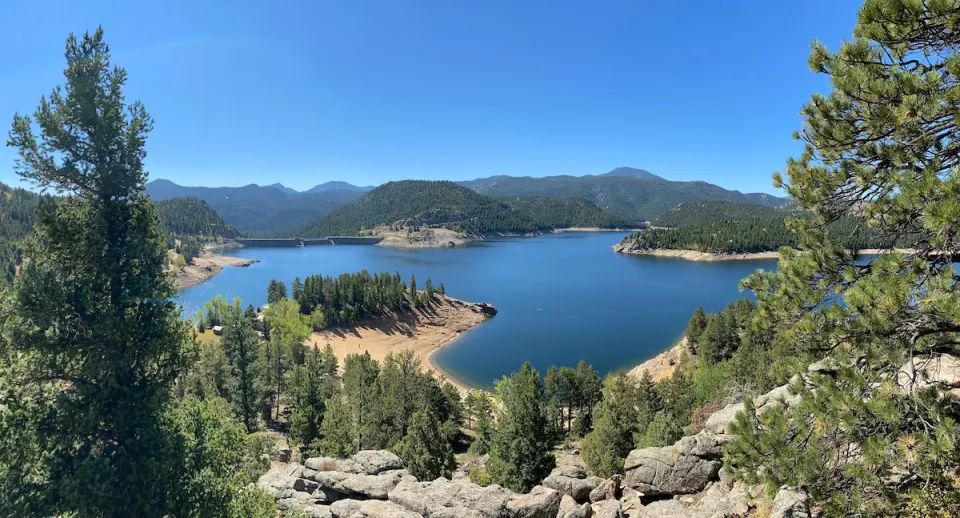
Judges permit Denver to divert 77,000 acre feet from the Colorado River for reservoir expansion
Overuse and climate change have caused the Colorado River’s water levels to plummet.

FREE Course: Walkable City 1: Why Walkability?
After describing his path towards focusing on walkability as the essence of good planning, Jeff Speck marches through his five principal reasons for making more walkable places.
Reinventing Malls: Planning Alchemy—Turning Gray Fields Into Gold
The course focuses on the opportunities and imperatives that shape reinvention of mall sites.

KFH Group Inc.
Greater Baltimore Committee
Eagle County Government
The Architects Foundation
University of Cincinnati Online
The Pocatello Development Authority
The Urban Renewal Agency of the City of Pocatello

