




















The authors of this academic article challenge conventional wisdom regarding the economic inefficiency of recent urban development patterns.


"The theoretical framework of urban and regional economics is built ontransportation costs for manufactured goods. But over the twentieth century, the costs of moving these goods have declined by over 90% in real terms, and there is little reason to doubt that this decline will continue. Moreover, technological change has eliminated theimportance of fixed infrastructure transport (rail and water) that played a critical role in creating natural urban centres. In this article, the authors document this decline and exploreseveral simple implications of a world where it is essentially free to move goods, but expensive to move people." [Editor's note: The link below is to a 1MB PDF document.]
Thanks to Urban Policy Listserv
FULL STORY: Cities, Regions and the Decline of Transport Costs


Planetizen Federal Action Tracker
A weekly monitor of how Trump’s orders and actions are impacting planners and planning in America.
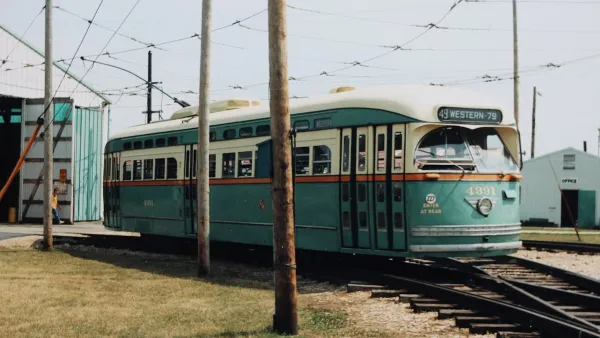
Chicago’s Ghost Rails
Just beneath the surface of the modern city lie the remnants of its expansive early 20th-century streetcar system.
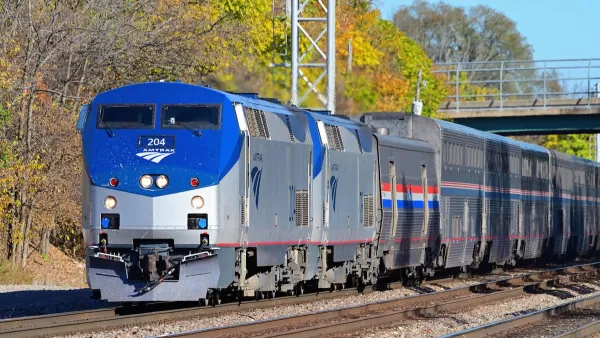
Amtrak Cutting Jobs, Funding to High-Speed Rail
The agency plans to cut 10 percent of its workforce and has confirmed it will not fund new high-speed rail projects.

Ohio Forces Data Centers to Prepay for Power
Utilities are calling on states to hold data center operators responsible for new energy demands to prevent leaving consumers on the hook for their bills.

MARTA CEO Steps Down Amid Citizenship Concerns
MARTA’s board announced Thursday that its chief, who is from Canada, is resigning due to questions about his immigration status.

Silicon Valley ‘Bike Superhighway’ Awarded $14M State Grant
A Caltrans grant brings the 10-mile Central Bikeway project connecting Santa Clara and East San Jose closer to fruition.

Urban Design for Planners 1: Software Tools
This six-course series explores essential urban design concepts using open source software and equips planners with the tools they need to participate fully in the urban design process.
Planning for Universal Design
Learn the tools for implementing Universal Design in planning regulations.

Caltrans
City of Fort Worth
Mpact (founded as Rail~Volution)
City of Camden Redevelopment Agency
City of Astoria
City of Portland
City of Laramie