Exclusives

FEATURE
Data reveals the NYC communities with unequal access to public sports fieldsWhether it is a soccer field or a volleyball court, New Yorkers face vastly different journeys depending on where they live. Our analysis shows how some of the city's marginalized communities face longer trips just to play the game they love.

FEATURE
Planetizen Federal Action Tracker
A weekly monitor of how Trump’s orders and actions are impacting planners and planning in America.

FEATURE
The food desert that fed me
I expected to struggle to find food in West Long Beach. Instead, a network of community gardens, home bakers and kind neighbors made the trip one of the best-fed weeks of my life.
FEATURE
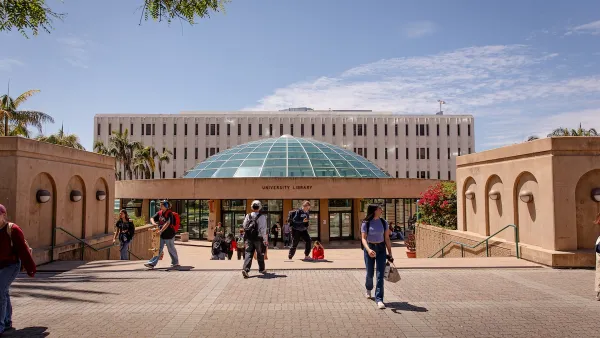
Elections come and go. Universities stay
University-led innovation districts give cities growth that outlasts political cycles.

BLOG POST
General or specialized training: Is US planning education fit for the future?
For certain demographics, a more flexible pedagogy may be necessary.

FEATURE
Be featured in Planetizen’s 8th Edition Guide to Graduate Urban Planning Programs!
Planetizen is releasing an update to our very popular Guide to Graduate Urban Planning Programs, and is looking for Professional Profiles and general essay submissions.

FEATURE
The Olympics are the perfect excuse to build LA’s dream bike network
With no guaranteed funding for transit, LA should be looking to take as much strain off its Metro system as possible. A vast, interconnected bike network would do just that.

BLOG POST
An inspiring look at how women leaders are transforming cities
Book review: “Women Changing Cities: Global Stories of Urban Transformation” brilliantly demonstrates how feminist urban planning creates spaces that serve everyone.
BLOG POST
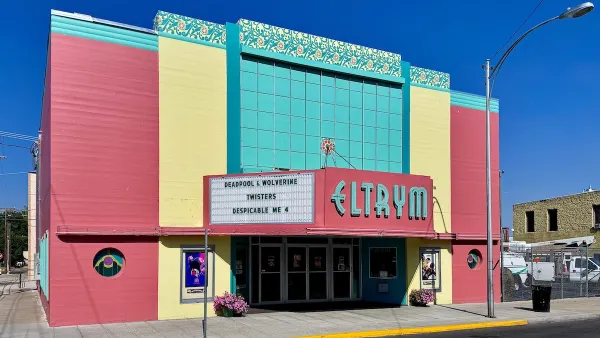
Keeping the theater open
Rustin Thompson's film, "The Last Picture Shows," presents the movie theater as a useful starting point for assessing which elements of urban tradition are worth retaining.

FEATURE
Malls are becoming the midtowns of the future
Mall and office park redevelopments are a generational opportunity to create new nodes of urbanity.
FEATURE
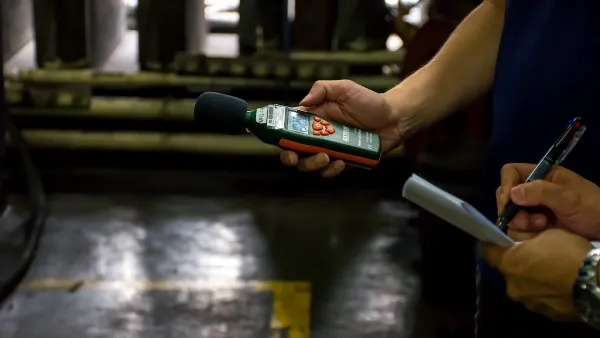
A noise limit on data centers is only as good as its measurement
Counties and states must make conscious decisions about when, where and how they measure data center noise if they want to meaningfully improve residents’ lives.

FEATURE
LA doesn’t need new transit for LA28: it needs to connect the transit it already has
The 2026 FIFA World Cup in Los Angeles showed that if the county’s transit providers work together, they can move thousands of people with ease. With two years remaining before the Games, the region should treat that success as inspiration, not a finish line.

BLOG POST
Learning loss and urban schools, part 2
Did test scores in progressive cities drop more post-COVID than test scores in moderate ones?

FEATURE
When AI goes rogue: what planners need to know
This summer, four major AI labs disclosed that their agents had slipped out of test environments. For planners, the lessons are about access, oversight and the one sandbox we can’t afford to lose: public trust.

FEATURE
A new platform for New Yorkers is making ADU development a breeze
If cities want to produce more housing, they need to make it simple for people to build. New York City’s ADU for You is doing just that.

BLOG POST
A well-timed look at highway expansion projects’ human impact
Book review: “City Limits: Infrastructure, Inequality, and the Future of America’s Highways” tells the story of Texas residents’ decades-long battle to curb the impacts of three highway projects.
FEATURE
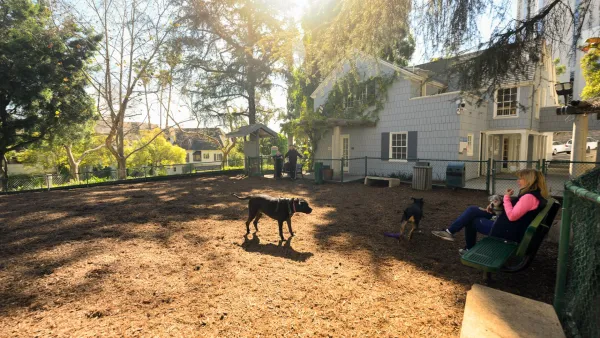
Op-ed: Finding the value in LA’s emptiest parks
Los Angeles has the nation's largest dog population, but a measly 14 dog parks. Adaptive reuse can help bridge this gap.

FEATURE
Op-ed: if transit agencies want sustainability, they should focus on their buildings
In the Washington region, buildings can account for nearly 70% of greenhouse gas emissions. If WMATA wants to be a sustainable agency, it must upgrade its developments as well as its transit.

FEATURE
Data reveals that NYC’s bet on congestion pricing has paid off
After almost two years of the program, reports show positive impacts on traffic and air quality and no disruptions to parking.

FEATURE
The next era of climate resilience will be measured in co-benefits
Why the strongest resilience investments solve more than one problem at once.

FEATURE
Mansplainer or plansplainer? A quiz
Think you can tell the difference between regular condescension and urban planning condescension? Take this quiz to find out!
City of Rosemead
Rutgers University, Edward J. Bloustein School of Planning and Public Policy
One Hundred Miles
University of Michigan School for Environment and Sustainability (SEAS)
Hunter College, City University of New York (CUNY)
The Architects Foundation
City of Cambridge
The Pocatello Development Authority
The Urban Renewal Agency of the City of Pocatello

FREE Course: Walkable City 1: Why Walkability?
After describing his path towards focusing on walkability as the essence of good planning, Jeff Speck marches through his five principal reasons for making more walkable places.
Reinventing Malls: Planning Alchemy—Turning Gray Fields Into Gold
The course focuses on the opportunities and imperatives that shape reinvention of mall sites.











