Planning Schools

Back to School: Planetizen’s Top 10 Master’s Programs for Urban Planners
Planetizen’s Editorial Director James Brasuell joins the Planning Commission Podcast to discuss their new list of the Top 10 Schools for Urban Planners.
The Top Schools For Urban Planners
The 7th Edition of the Planetizen Guide to Graduate Urban Planning Programs, now available, includes an updated ranking of the Top 25 master’s programs in urban planning, city planning, regional planning, and community planning.
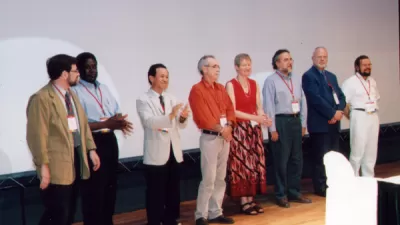
The World's Planning Schools Joined Hands in Shanghai in 2001
The Shanghai Statement creating the Global Planning Education Association Network (GPEAN) was signed by ten planning school associations at the closing ceremony of the 1st World Planning Schools Congress at Tongji University, 20 years ago this week.

Urban and Regional Planning Education in Mexico
Sergio Peña, of El Colegio de la Frontera Norte in Mexico, writes about a recent article he authored in the Journal of Planing Education and Research.
The Top Schools For Urban Planners - 2019
The 6th Edition of the Planetizen Guide to Graduate Urban Planning Programs is now available. The new Guide includes Planetizen's updated ranking of the Top 25 graduate urban planning programs.

Graduate Urbanism Studies Aren't What They Used to Be
As society's understanding of cities, neighborhoods, and communities continues to evolve, so too do the graduate education programs created to provide professional training in those areas.
Planning Accreditation Board seeks public comments on proposed new accreditation standards
The PAB is proposing a substantial revision of the standards and criteria for accreditation of university planning programs. A public comment period on the proposal has just opened and lasts through 15 December. Here's what PAB says about the changes: "PAB is pleased to introduce a comprehensive revision of its accreditation standards and criteria. The goals of the change process include:
Why I Decided To Go To Planning School
Planetizen intern Victor Negrete explains how he made the choice to attend planning school, and the thought process he went through deciding which schools to apply for, and ultimately to attend.
Deciding if You Want to be a Planner
Not sure if you want to be a planner? Recently my colleagues and I have received a spate of emails from prospective students around the world wanting to know whether planning is a field they should pursue. Their extensive lists of questions show that this is a pressing issue for them. This entry answers some of the more common questions and aims to help prospective students come to programs with a shorter and more focused set of topics to explore.
My Pre-Professional Paradigm Shift
More than anything, I remember laughing at them. While I, as a bright-eyed undergrad, woke up at 11 to enjoy my very liberal arts classes in everything from gerontology to the physics of music, the business students would trudge out the door in suits and ties. For class. In late-summer Philly humidity. Eighteen years old and already soulless pre-professional slaves. Poor bastards, I thought. Now that I’m in graduate school, two things keep the schadenfreude at bay as Wall Street drowns in its own excesses. One, karma’s a bitch. And two, as a soon-to-be planner, I’m quickly realizing I’ve become one of them.
Orientations, Courses, and Riding the Figurative Bike
This week will be my first full week of classes at MIT; however, I have actually been here for three. I arrived into Cambridge at the end of August to attend the weeklong department orientation, which was as orientations are – full of very important yet-easy-to-forget information. Alone, the pressure of learning nearly 65 names can induce periodic episodes of amnesia.
Graduate School 2008: Nuts and Bolts of Applying
With the summer coming to a close new students are making their way to graduate planning programs. For those thinking about applying for 2008 it is time to start preparing. The deadlines can be as early as December, now only a few months away. These tips, based on my experiences on several admissions committees, can help you make sense of the application process. What Admissions Committees Look For Planning schools consider up to six different elements in admissions to masters programs: letters of intent, experience in activities related to planning (paid and volunteer work, internships, and activism), letters of reference, previous grades, GREs, and work samples.
City of Costa Mesa
Licking County
Barrett Planning Group LLC
HUD's Office of Policy Development and Research
Mpact Transit + Community
HUD's Office of Policy Development and Research
City of Universal City TX
ULI Northwest Arkansas
Town of Zionsville

Urban Design for Planners 1: Software Tools
This six-course series explores essential urban design concepts using open source software and equips planners with the tools they need to participate fully in the urban design process.
Planning for Universal Design
Learn the tools for implementing Universal Design in planning regulations.