


The proposal is simple. Instead of investing billions of dollars more on elaborate infrastructure or trust a corrupted police force, the concept is to nudge this complex system at two targeted points in the city, argues Mitchell Sutika Sipus.


The reconstruction of Kabul, Afghanistan has been a struggle as city infrastructure can only accommodate about 3 million inhabitants, yet the city presently consists of nearly 6 million people. Everyday the city is stuck in constant gridlock for hours at a time. Initiatives thus far have focused on road construction and law enforcement, but these approaches have caused even more delays and further congested an already broken system.
Sutika Sipus's proposal recognizes Kabul traffic is a self organized system determined by many variables. The concept is to inject simple incentives to nudge this system, targeted in two particular locations. The solution functions by shifting some existing resources and using a very low-tech monitoring system to offset corruption, summed up into four easy steps.
FULL STORY: A Simple Solution to Kabul's Massive Traffic Problem

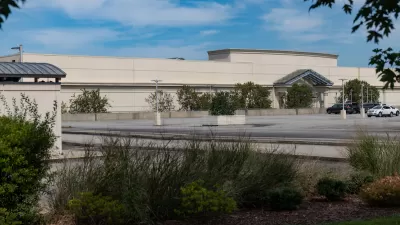
Pennsylvania Mall Conversion Bill Passes House
If passed, the bill would promote the adaptive reuse of defunct commercial buildings.
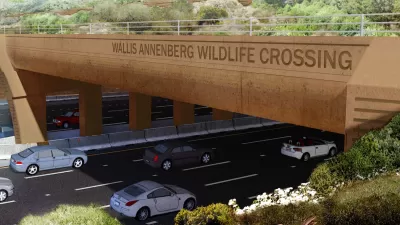
World's Largest Wildlife Overpass In the Works in Los Angeles County
Caltrans will soon close half of the 101 Freeway in order to continue construction of the Wallis Annenberg Wildlife Crossing near Agoura Hills in Los Angeles County.

U.S. Supreme Court: California's Impact Fees May Violate Takings Clause
A California property owner took El Dorado County to state court after paying a traffic impact fee he felt was exorbitant. He lost in trial court, appellate court, and the California Supreme Court denied review. Then the U.S. Supreme Court acted.

California Grid Runs on 100% Renewable Energy for Over 9 Hours
The state’s energy grid was entirely powered by clean energy for some portion of the day on 37 out of the last 45 days.

New Forecasting Tool Aims to Reduce Heat-Related Deaths
Two federal agencies launched a new, easy-to-use, color-coded heat warning system that combines meteorological and medical risk factors.

AI Traffic Management Comes to Dallas-Fort Worth
Several Texas cities are using an AI-powered platform called NoTraffic to help manage traffic signals to increase safety and improve traffic flow.
City of Costa Mesa
Licking County
Barrett Planning Group LLC
HUD's Office of Policy Development and Research
Mpact Transit + Community
HUD's Office of Policy Development and Research
Tufts University, Department of Urban and Environmental Policy & Planning
City of Universal City TX
ULI Northwest Arkansas

Urban Design for Planners 1: Software Tools
This six-course series explores essential urban design concepts using open source software and equips planners with the tools they need to participate fully in the urban design process.
Planning for Universal Design
Learn the tools for implementing Universal Design in planning regulations.
