


Sophie Landrin looks at the global rise in the use of cable cars - the kind you find on a ski lift and not on the streets of San Francisco - as a transportation alternative. Several French cities are developing plans to become "wired".


It turns out that cable cars, also known as gondola lifts, aren't just for floating serenely over a snow covered mountain. In projects developed over the last decade in Medellin,
Colombia, and Caracas, Venezuela cable cars were successfully rethought as a means of
mass transportation serving some of those cities' poorest neighbourhoods.
"Cable transport is cost-effective, environmentally friendly, safe and
requires little infrastructure," writes Landrin. "It is particularly suitable for crossing
natural obstacles such as rivers or scaling hills, there being no need
for expensive engineering work. Over an equivalent distance a cable link
costs half as much as a tram line, and though no rival for underground
railways in terms of capacity, some models can carry up to 8,000
passengers an hour."
Now France, one of the first countries to test the use of urban cable cars, is once again hopping on board. Brest and Toulouse are due to complete lines in the next five years. The Parisian suburbs and Grenoble, where a cable car system "connecting the city centre to a hilltop fort across the river Isère" was completed in 1934, are developing cable car plans.
"'This is neither a gadget nor a tourist attraction; it is all about
transport,' says Joël Carreiras, a member of Toulouse town council and
vice-president of the metropolitan council tasked with transport. 'We
either had to dig a tunnel, or go over the top, and we didn't have the
necessary finance.' The cable-car system, including three stops, is
slated to cost €45m ($58m)."
FULL STORY: Lift-off for urban cable car projects as cities seek transport solutions

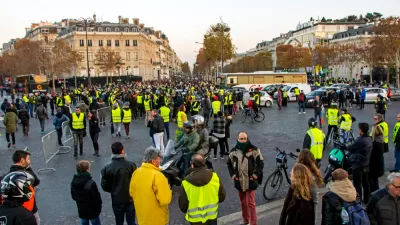
France Drops Road Tolling Plans Amid Fuel Tax Protests
Controversial London-style congestion pricing won't be coming to French cities due to concerns sparked by the 'Yellow Vest' protests over an upcoming fuel tax hike, but President Macron stated the fuel tax increases will go forward in January.

Interdisciplinarity and the Equitable City
On Urban-Think Tank, a design firm working at the intersection of architecture and urbanism to further environmental justice.
The Future of Transit, According to France
Yonah Freemark investigates France's new love affair with the tram, which is spreading like wildfire in cities across the country, supplanting major bus routes and giving transit ridership a healthy boost in the process.
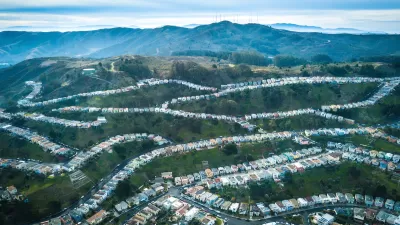
Depopulation Patterns Get Weird
A recent ranking of “declining” cities heavily features some of the most expensive cities in the country — including New York City and a half-dozen in the San Francisco Bay Area.
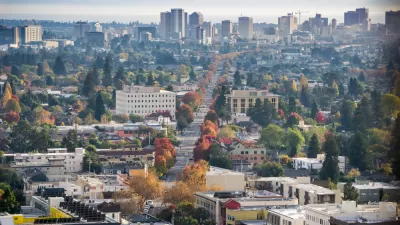
California Exodus: Population Drops Below 39 Million
Never mind the 40 million that demographers predicted the Golden State would reach by 2018. The state's population dipped below 39 million to 38.965 million last July, according to Census data released in March, the lowest since 2015.
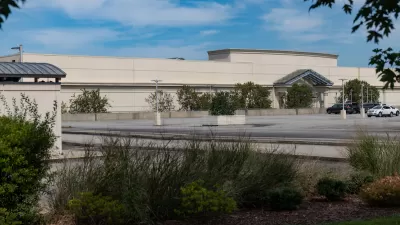
Pennsylvania Mall Conversion Bill Passes House
If passed, the bill would promote the adaptive reuse of defunct commercial buildings.

Google Maps Introduces New Transit, EV Features
It will now be easier to find electric car charging stations and transit options.

Ohio Lawmakers Propose Incentivizing Housing Production
A proposed bill would take a carrot approach to stimulating housing production through a grant program that would reward cities that implement pro-housing policies.

Chicago Awarded $2M Reconnecting Communities Grant
Community advocates say the city’s plan may not do enough to reverse the negative impacts of a major expressway.
City of Costa Mesa
Licking County
Barrett Planning Group LLC
HUD's Office of Policy Development and Research
Mpact Transit + Community
HUD's Office of Policy Development and Research
City of Universal City TX
ULI Northwest Arkansas
Town of Zionsville

Urban Design for Planners 1: Software Tools
This six-course series explores essential urban design concepts using open source software and equips planners with the tools they need to participate fully in the urban design process.
Planning for Universal Design
Learn the tools for implementing Universal Design in planning regulations.
