


Steve Whitman, AICP, and Sharon Ferguson discuss what planners need to know about Permaculture, a holistic, integrated system analysis and design tool that very few planners are using.


Offering "a pathway to a positive transition beyond sustainability to resilient communities," the authors argue, "Permaculture is an approach to designing human settlements and agricultural systems that are modeled on the relationships found in natural ecologies."
Differing from sustainable community planning efforts in that Permaculture, "seeks to integrate the proposed sustainable elements (e.g., water catchment, renewable energy, district heating, food growing, waste recycling, transportation, etc.) into a whole system that operates efficiently so that the number of inputs are minimized but outputs attained are maximized," write Whitman and Ferguson, "The goal is to create an ecosystem that provides as many useful products and functions out of the system as the designer's abilities allow while healing the planet."
In this article, Whitman and Ferguson spotlight four examples that "illustrate the range of applying permaculture tools and strategies."
Thanks to Sharon Ferguson
FULL STORY: Taking the Permaculture Path to Community Resilience


Washington State Legislates Statewide Cohousing Development
The new law will prevent local governments from prohibiting the development of coliving multifamily development through zoning and other regulations.

Building Community With Cohousing
Developers and buyers create new models for housing that hold the promise of a more environmentally friendly, connected, and multigenerational way of living.

Single-Family Zoning on the Cutting Block in Bloomington, Indiana
Move over Minneapolis. An Indiana college town joins the avant-garde of planning innovation by nearing the finish line with a new Unified Development Ordinance that would allow duplexes, triplexes, and fourplexes in single-family neighborhoods.
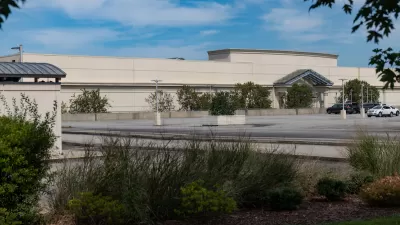
Pennsylvania Mall Conversion Bill Passes House
If passed, the bill would promote the adaptive reuse of defunct commercial buildings.

Coming Soon to Ohio: The Largest Agrivoltaic Farm in the US
The ambitious 6,000-acre project will combine an 800-watt solar farm with crop and livestock production.
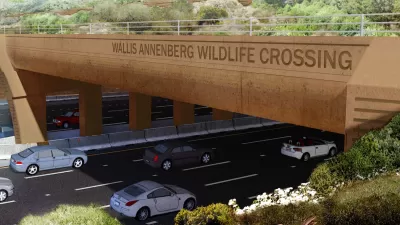
World's Largest Wildlife Overpass In the Works in Los Angeles County
Caltrans will soon close half of the 101 Freeway in order to continue construction of the Wallis Annenberg Wildlife Crossing near Agoura Hills in Los Angeles County.

California Grid Runs on 100% Renewable Energy for Over 9 Hours
The state’s energy grid was entirely powered by clean energy for some portion of the day on 37 out of the last 45 days.

New Forecasting Tool Aims to Reduce Heat-Related Deaths
Two federal agencies launched a new, easy-to-use, color-coded heat warning system that combines meteorological and medical risk factors.

AI Traffic Management Comes to Dallas-Fort Worth
Several Texas cities are using an AI-powered platform called NoTraffic to help manage traffic signals to increase safety and improve traffic flow.
City of Costa Mesa
Licking County
Barrett Planning Group LLC
HUD's Office of Policy Development and Research
Mpact Transit + Community
HUD's Office of Policy Development and Research
Tufts University, Department of Urban and Environmental Policy & Planning
City of Universal City TX
ULI Northwest Arkansas

Urban Design for Planners 1: Software Tools
This six-course series explores essential urban design concepts using open source software and equips planners with the tools they need to participate fully in the urban design process.
Planning for Universal Design
Learn the tools for implementing Universal Design in planning regulations.
