


Michael J. Coren has a preview of an MIT report that lays out the economic and environmental benefits of stiffer pavement.


It's not much, but roadway asphalt has a springiness to it. As cars roll over asphalt they create indentions about .0003 inches deep. As a result, cars are essentially going up a tiny, yet endless, hill.
"A study by MIT civil engineers found stiffening the nation's pavements could cut fuel use by 3%, the equivalent of 273 million barrels of crude oil, or $15 billion, per year. As a result, CO2 emissions (PDF) would fall by 46.5 million metric tons per year (more than Oregon emits from burning fossil fuels annually)," writes Coren.
The research by Mehdi Akbarian and Franz-Josef Ulm of MIT will appear later this month in the Transportation Research Record. The researchers insist that the cost of replacing roadway surfaces would pay for itself over time. A statement from MIT indicates "...state departments of transportation would save money while reducing their environmental footprint over time, because the roads won't deteriorate as quickly."
Thanks to Jessica Brent
FULL STORY: Stiffer Roads Could Save Billions. That’s Right: Stiffer Roads

Is Concrete the New Asphalt?
As oil prices rise, so does the cost of asphalt. Concrete, historically more expensive, is now becoming a viable cost competitor. Because of its lighter shade, its also been shown to contribute less to climate change.

To Make Cities More Livable, Get Rid of Pavement
Paved surfaces take up close to a third of space in U.S. cities, polluting waterways and contributing to the urban heat island effect.
The Undeniable Link Between Redlining and Extreme Heat in American Cities
The country’s history of racist and segregationist housing policies is affecting vulnerable low-income communities of color that are bearing the brunt of climate change impacts.

Depopulation Patterns Get Weird
A recent ranking of “declining” cities heavily features some of the most expensive cities in the country — including New York City and a half-dozen in the San Francisco Bay Area.
California Exodus: Population Drops Below 39 Million
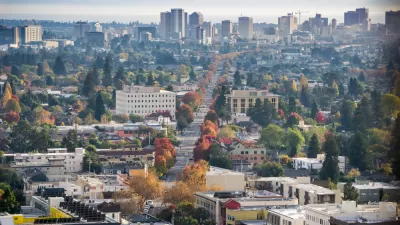
Never mind the 40 million that demographers predicted the Golden State would reach by 2018. The state's population dipped below 39 million to 38.965 million last July, according to Census data released in March, the lowest since 2015.

Chicago to Turn High-Rise Offices into Housing
Four commercial buildings in the Chicago Loop have been approved for redevelopment into housing in a bid to revitalize the city’s downtown post-pandemic.

Houston Mayor Pauses Complete Streets Projects
The move raises concerns among road safety advocates who point out that traffic deaths continue to rise.

Twin Cities Trains Move to Fewer Cars, Higher Frequency
Headways will drop from 15 minutes to 12 minutes.

DC Bikeshare System Breaks Ridership Record
Capital Bikeshare users took over 20,000 rides on one day in March.
Barrett Planning Group LLC
City of Cleburne
KTUA Planning and Landscape Architecture
HUD's Office of Policy Development and Research
Mpact Transit + Community
HUD's Office of Policy Development and Research
City of Universal City TX
ULI Northwest Arkansas
City of Laramie, Wyoming

Urban Design for Planners 1: Software Tools
This six-course series explores essential urban design concepts using open source software and equips planners with the tools they need to participate fully in the urban design process.
Planning for Universal Design
Learn the tools for implementing Universal Design in planning regulations.
