


The increase in outdoor music festivals, guerrilla gardening, temporary restaurants, cinemas and pop-up shops are all examples of "a growing appetite for transforming our apparently prosaic, profit-led landscape into something else."


In Britain, there is a burgeoning desire amongst citizens to change the unused public space around them. Generally, spaces are recreated to be "more playful, less predictable, even slightly utopian," writes Andy Beckett.
"For at least half a century, Britain has been a center for experiments in land use: city squats in the 60s, rural free festivals in the 70s, raves in the 80s, anti-roads encampments in the 90s. These experiments have often been an irritation to the authorities, but they have also subtly shifted official thinking about public places."
Beckett thinks the way Britons treat public space has changed for good: "We have a limited amount of countryside and indifferent weather, so there is only so much mileage in our natural sublime. It is in the built environment that much of our potential lies. And one based on driving and shopping, besides being environmentally disastrous, will always be a bit too boring to keep us all occupied."
FULL STORY: The New Public Space: How Britons Have Reclaimed the Streets

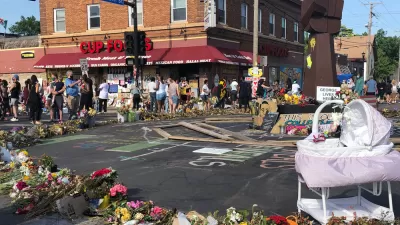
The Racial Reckoning in Public Spaces
Following George Floyd’s murder in 2020, there was an explosion of anti-racist street art across the country. “When we allow ourselves to release our emotions, oftentimes what is produced out of that is art.”

Trafalgar Square Shows How to Reuse Pedestals Where Statues Once Stood
Baltimore tore down its Confederate monuments, now they have an opportunity to showcase the city's artists.
Does the High Line Signify a New Era of Urban Design?
Sue Illman thinks so. And in this editorial for The Guardian, she argues that the success of the High Line signifies a new era in which the quality of our parks and public spaces, rather than our skylines, makes our towns and cities stand out.
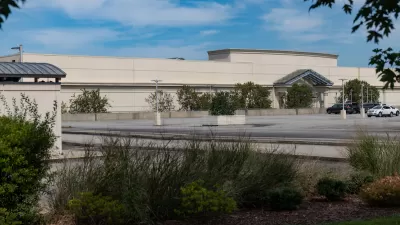
Pennsylvania Mall Conversion Bill Passes House
If passed, the bill would promote the adaptive reuse of defunct commercial buildings.
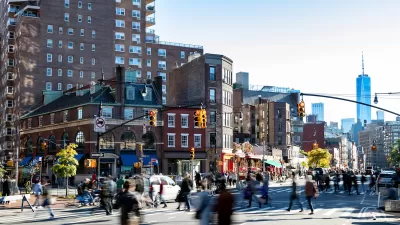
Planning for Accessibility: Proximity is More Important than Mobility
Accessibility-based planning minimizes the distance that people must travel to reach desired services and activities. Measured this way, increased density can provide more total benefits than increased speeds.
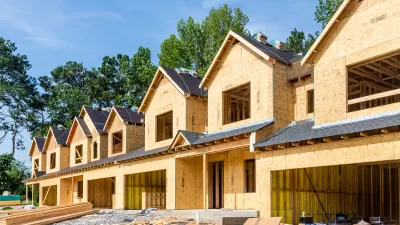
Fair Housing Cannot Take a Back Seat to ‘Build, Baby, Build’
If we overlook fair housing principles in the plan to build US housing back better, we risk ending up right back where we started.

LA Metro Board Approves New 710 Freeway Plan
The newest plan for the 710 corridor claims it will not displace any residents.

Austin’s Proposed EV Charging Rules Regulate Station Locations, Size
City planners say the new rules would ensure an efficient distribution of charging infrastructure across the city and prevent an overconcentration in residential areas.

Making California State Parks More Climate-Resilient
A recently released report offers recommendations for keeping state parks healthy and robust, including acquiring additional land for conservation and recreation.
City of Costa Mesa
Licking County
Barrett Planning Group LLC
HUD's Office of Policy Development and Research
Mpact Transit + Community
HUD's Office of Policy Development and Research
Tufts University, Department of Urban and Environmental Policy & Planning
City of Universal City TX
ULI Northwest Arkansas

Urban Design for Planners 1: Software Tools
This six-course series explores essential urban design concepts using open source software and equips planners with the tools they need to participate fully in the urban design process.
Planning for Universal Design
Learn the tools for implementing Universal Design in planning regulations.
