


Study indicates that public transit improvements and more transit oriented development can provide large but often overlooked health benefits.


This research indicates that people who live or work in communities with high quality public transportation tend to drive significantly less and rely more on alternative modes (walking, cycling and public transit) than they would in more automobile-oriented areas. This reduces traffic crashes and pollution emissions, increases physical fitness and mental health, and provides access to medical care and healthy food. These impacts are significant in magnitude compared with other planning objectives, but are often overlooked or undervalued in conventional transport planning. Various methods can be used to quantify and monetize (measure in monetary units) these health impacts. This analysis indicates that improving public transit can be one of the most cost effective ways to achieve public health objectives, and public health improvements are among the largest benefits provided by high quality public transit and transit-oriented development.
Thanks to Todd Litman
FULL STORY: Evaluating Public Transportation Health Benefits

Comprehensive Analysis of Transit Energy Conservation Benefits
A recent report by the libertarian Cato Institute, Does Rail Transit Save Energy or Reduce Greenhouse Gas Emissions?, claims that public transit service improvements are ineffective at conserving energy and reducing pollution emissions. But this conclusion is based on faulty analysis.

Opinion: To Improve Health Outcomes, Invest in Public Transit
A medical student calls for improving public transit to boost the health of people and the environment.

Public Transit Alternatives to Rideshare Offer Affordable and Accessible Mobility
In Minnesota, local transit agencies are seeing growth in ridership for on-demand microtransit services since the start of the pandemic.

Depopulation Patterns Get Weird
A recent ranking of “declining” cities heavily features some of the most expensive cities in the country — including New York City and a half-dozen in the San Francisco Bay Area.
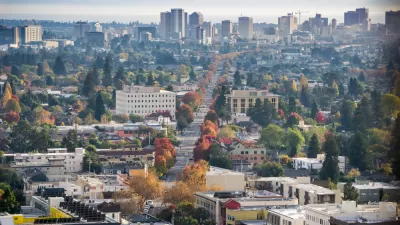
California Exodus: Population Drops Below 39 Million
Never mind the 40 million that demographers predicted the Golden State would reach by 2018. The state's population dipped below 39 million to 38.965 million last July, according to Census data released in March, the lowest since 2015.

Chicago to Turn High-Rise Offices into Housing
Four commercial buildings in the Chicago Loop have been approved for redevelopment into housing in a bid to revitalize the city’s downtown post-pandemic.

How California Transit Agencies are Addressing Rider Harassment
Safety and harassment are commonly cited reasons passengers, particularly women and girls, avoid public transit.

Significant Investments Needed to Protect LA County Residents From Climate Hazards
A new study estimates that LA County must invest billions of dollars before 2040 to protect residents from extreme heat, increasing precipitation, worsening wildfires, rising sea levels, and climate-induced public health threats.

Federal Rule Raises Cost for Oil and Gas Extraction on Public Lands
An update to federal regulations raises minimum bonding to limit orphaned wells and ensure cleanup costs are covered — but it still may not be enough to mitigate the damages caused by oil and gas drilling.
City of Costa Mesa
Licking County
Barrett Planning Group LLC
HUD's Office of Policy Development and Research
Mpact Transit + Community
HUD's Office of Policy Development and Research
City of Universal City TX
ULI Northwest Arkansas
Town of Zionsville

Urban Design for Planners 1: Software Tools
This six-course series explores essential urban design concepts using open source software and equips planners with the tools they need to participate fully in the urban design process.
Planning for Universal Design
Learn the tools for implementing Universal Design in planning regulations.
