


This article from GOOD wonders whether farms could become the new cornerstone amenity in suburban residential communities.


The rise of urban agriculture and local farming can be seen in cities across America. GOOD's Allison Arieff looks at how that trend is making its way into the residential developments of suburban U.S.A.
"Look at Google Maps images of any platted but unbuilt or unfinished subdivision-all remaining evidence of what stood before erased, replaced with flattened house lots with nothing on them, paved streets including curvy cul-de-sacs, and even street signs, but no signs of life-and you'll understand the impulse to do things differently. According the American Farmland Trust, more than 6 million acres of agricultural land in the United States were lost to development between 1992 and 1997 alone. Consider that many of those acres were lost to developments that never saw the light of day. Is it too late to restore that acreage? And is it possible that agriculture could be suburbia's best hope?
Well, sort of. It's not as if Orange County, California, despite its dire decline in home values, is going to revert back to acres of orange groves. But around the country, there's a growing interest in looking at the ways agriculture might help retrofit ailing suburbs and cities, and offer an alternative way of thinking about new developments."
FULL STORY: Agriculture is the New Golf: Rethinking Suburban Communities


An Agrihood Takes Root in Palm Springs
Developer Freehold Communities is planning a suburban farming community in California's Sonora Desert.
Farms Become the Latest Must-Have Suburban Amenity
Forget about golf courses and swimming pools, says Luke Runyon, developers are drawing in residents by integrating fully functioning farms into their new neighborhoods.
The De-Evolution of a Suburban Gated Community
Inside this gated community in the L.A. suburb of Hemet, the recession is taking a tough toll and making life difficult for the families that had moved there for quiet calm.
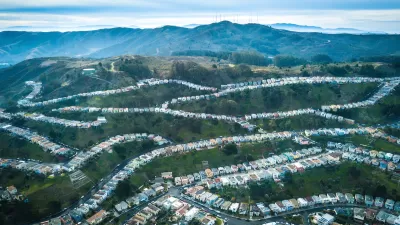
Depopulation Patterns Get Weird
A recent ranking of “declining” cities heavily features some of the most expensive cities in the country — including New York City and a half-dozen in the San Francisco Bay Area.
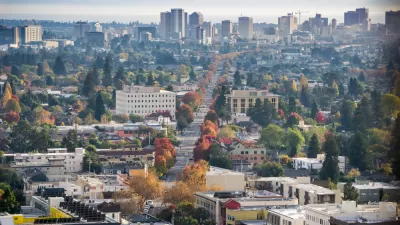
California Exodus: Population Drops Below 39 Million
Never mind the 40 million that demographers predicted the Golden State would reach by 2018. The state's population dipped below 39 million to 38.965 million last July, according to Census data released in March, the lowest since 2015.

Chicago to Turn High-Rise Offices into Housing
Four commercial buildings in the Chicago Loop have been approved for redevelopment into housing in a bid to revitalize the city’s downtown post-pandemic.

New Park Opens in the Santa Clarita Valley
The City of Santa Clarita just celebrated the grand opening of its 38th park, the 10.5-acre Skyline Ranch Park.

U.S. Supreme Court: California's Impact Fees May Violate Takings Clause
A California property owner took El Dorado County to state court after paying a traffic impact fee he felt was exorbitant. He lost in trial court, appellate court, and the California Supreme Court denied review. Then the U.S. Supreme Court acted.

How Urban Form Impacts Housing Affordability
The way we design cities affects housing costs differently than you might think.
City of Costa Mesa
Licking County
Barrett Planning Group LLC
HUD's Office of Policy Development and Research
Mpact Transit + Community
HUD's Office of Policy Development and Research
City of Universal City TX
ULI Northwest Arkansas
Town of Zionsville

Urban Design for Planners 1: Software Tools
This six-course series explores essential urban design concepts using open source software and equips planners with the tools they need to participate fully in the urban design process.
Planning for Universal Design
Learn the tools for implementing Universal Design in planning regulations.
