


Simon Properties Group is attempting to acquire rival General Growth Properties Inc., giving them a near-monopoly on America's malls. Will complete control of malldom give them the power to bring back this dying breed?


Greg Lindsay writes, "Analysis of the deal has dwelt on retrenchment and consolidation, the combined entity would own 30 percent of the nation's shopping malls. "More important," according to The Wall Street Journal, "it would own nearly half of the country's 319 best-performing malls in terms of sales, giving it unmatched power over retailers and control over the look and feel of the shopping experience."
By cementing a near-monopoly the best locations and the highest-grossing tenants, Simon is hoping to delay their inevitable decline. (Or at least milk these cash cows for all their worth.) But as Steiner predicted four years ago, the most lucrative "will be the last ones to die.""
FULL STORY: How Much Longer Can Shopping Malls Survive?

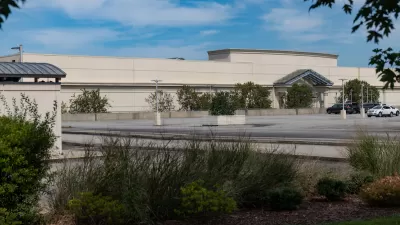
Pennsylvania Mall Conversion Bill Passes House
If passed, the bill would promote the adaptive reuse of defunct commercial buildings.
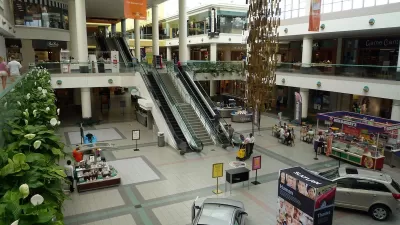
The Mall Is Dead — Long Live the Mall
The American shopping mall may be closer to its original vision than ever.

The Walkable Urbanism of Big Box Stores
For residents of many U.S. small towns and exurbs, the local Walmart offers a surprising benefit missing elsewhere in their communities: walkability.
Pennsylvania Mall Conversion Bill Passes House
If passed, the bill would promote the adaptive reuse of defunct commercial buildings.

Planning for Accessibility: Proximity is More Important than Mobility
Accessibility-based planning minimizes the distance that people must travel to reach desired services and activities. Measured this way, increased density can provide more total benefits than increased speeds.
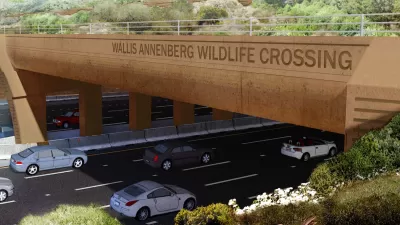
World's Largest Wildlife Overpass In the Works in Los Angeles County
Caltrans will soon close half of the 101 Freeway in order to continue construction of the Wallis Annenberg Wildlife Crossing near Agoura Hills in Los Angeles County.

Eviction Looms for Low-Income Tenants as Rent Debt Rises
Nonprofit housing operators across the country face almost $10 billion in rent debt.

Brightline West Breaks Ground
The high-speed rail line will link Las Vegas and the Los Angeles area.

Colorado Bans No-Fault Evictions
In most cases, landlords must provide a just cause for evicting tenants.
City of Costa Mesa
Licking County
Barrett Planning Group LLC
HUD's Office of Policy Development and Research
Mpact Transit + Community
HUD's Office of Policy Development and Research
Tufts University, Department of Urban and Environmental Policy & Planning
City of Universal City TX
ULI Northwest Arkansas

Urban Design for Planners 1: Software Tools
This six-course series explores essential urban design concepts using open source software and equips planners with the tools they need to participate fully in the urban design process.
Planning for Universal Design
Learn the tools for implementing Universal Design in planning regulations.
