


Urban convenience stores are being further linked to childhood obesity after the release of a new study from Temple University.


"A study by Temple University's Center for Obesity Research and Education revealed that for a "little more than a dollar" city kids can walk into a typical corner store and fill up with 350 calories of low-nutrition junk, and for many, it has become a way of life and gateway to obesity.
Brianna Almaguer Sandoval of The Food Trust in Philadelphia said that in low-income neighborhoods, finding a source of nutritious food can be difficult, particularly for young people who lack transportation to supermarkets located outside poorer communities, which some have dubbed 'supermarket deserts.'"
Research indicates that for the majority of these corners stores and convenience marts, healthy and fresh food options make up as little as 11% of stocks.
FULL STORY: Little Stores and Fatter Kids

First Fast Food, Now South L.A. Looks to Ban Convenience Stores
Community activists are calling for a ban on new convenience stores in South Los Angeles, a lower income part of town that saw a ban on new fast food restaurants last year.

Study: School Biking Programs Can Boost Student Health
A survey of middle school students who participated in in-school cycling programs showed a potential correlation to improved mental health.

Study: Extracurricular Activities Benefit Children’s Mental Health
A new study indicates that improving access to extracurricular activities (EA) may help address the growing mental health needs of children and caregivers.
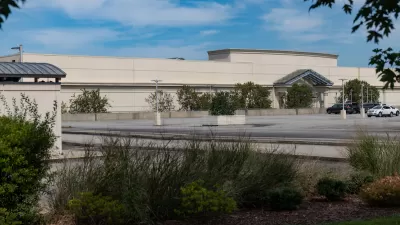
Pennsylvania Mall Conversion Bill Passes House
If passed, the bill would promote the adaptive reuse of defunct commercial buildings.

World's Largest Wildlife Overpass In the Works in Los Angeles County
Caltrans will soon close half of the 101 Freeway in order to continue construction of the Wallis Annenberg Wildlife Crossing near Agoura Hills in Los Angeles County.

U.S. Supreme Court: California's Impact Fees May Violate Takings Clause
A California property owner took El Dorado County to state court after paying a traffic impact fee he felt was exorbitant. He lost in trial court, appellate court, and the California Supreme Court denied review. Then the U.S. Supreme Court acted.

California Grid Runs on 100% Renewable Energy for Over 9 Hours
The state’s energy grid was entirely powered by clean energy for some portion of the day on 37 out of the last 45 days.

New Forecasting Tool Aims to Reduce Heat-Related Deaths
Two federal agencies launched a new, easy-to-use, color-coded heat warning system that combines meteorological and medical risk factors.

AI Traffic Management Comes to Dallas-Fort Worth
Several Texas cities are using an AI-powered platform called NoTraffic to help manage traffic signals to increase safety and improve traffic flow.
City of Costa Mesa
Licking County
Barrett Planning Group LLC
HUD's Office of Policy Development and Research
Mpact Transit + Community
HUD's Office of Policy Development and Research
Tufts University, Department of Urban and Environmental Policy & Planning
City of Universal City TX
ULI Northwest Arkansas

Urban Design for Planners 1: Software Tools
This six-course series explores essential urban design concepts using open source software and equips planners with the tools they need to participate fully in the urban design process.
Planning for Universal Design
Learn the tools for implementing Universal Design in planning regulations.
