


Planner Alex Aylett discusses the challenges municipalities face when trying to create a successful sustainability plan, and how to overcome them with a new toolkit that takes cues from New York City's PlaNYC.


More cities and counties are eager to create sustainability plans that bring together their environmental, economic, and social initiatives under one holistic vision. But the process can be daunting and complex, especially for cash-strapped jurisdictions with small staffs.
Fortunately, big cities like New York, with its renowned PlaNYC sustainability plan, have blazed the trail by developing a winning process for creating a plan that sets ambitious but achievable goals that are measured and reported over time. The best practices pioneered by New York have been studied and distilled in a Sustainability Planning Toolkit from ICLEI-Local Governments for Sustainability USA.
Alex Aylett at Worldchanging reviews the toolkit and delves into the biggest challenges local government staff face as they begin to develop their sustainability plans: how to create and sustain political will, hire a sustainability coordinator, build a planning team, engage diverse stakeholders in the planning process (from city hall departments to community leaders, academics, and ordinary citizens), and manage a sprawling process centrally.
Thanks to Don Knapp
FULL STORY: Toolkit for Change: ICLEI's new Urban Sustainability Framework

Depopulation Patterns Get Weird
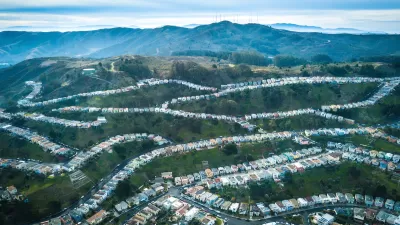
A recent ranking of “declining” cities heavily features some of the most expensive cities in the country — including New York City and a half-dozen in the San Francisco Bay Area.
California Exodus: Population Drops Below 39 Million
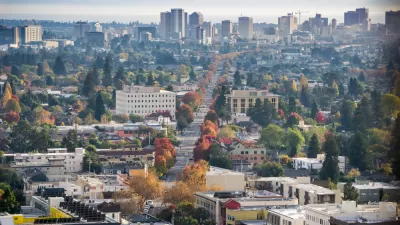
Never mind the 40 million that demographers predicted the Golden State would reach by 2018. The state's population dipped below 39 million to 38.965 million last July, according to Census data released in March, the lowest since 2015.

Chicago to Turn High-Rise Offices into Housing
Four commercial buildings in the Chicago Loop have been approved for redevelopment into housing in a bid to revitalize the city’s downtown post-pandemic.

New Park Opens in the Santa Clarita Valley
The City of Santa Clarita just celebrated the grand opening of its 38th park, the 10.5-acre Skyline Ranch Park.

U.S. Supreme Court: California's Impact Fees May Violate Takings Clause
A California property owner took El Dorado County to state court after paying a traffic impact fee he felt was exorbitant. He lost in trial court, appellate court, and the California Supreme Court denied review. Then the U.S. Supreme Court acted.

How Urban Form Impacts Housing Affordability
The way we design cities affects housing costs differently than you might think.
City of Costa Mesa
Licking County
Barrett Planning Group LLC
HUD's Office of Policy Development and Research
Mpact Transit + Community
HUD's Office of Policy Development and Research
City of Universal City TX
ULI Northwest Arkansas
Town of Zionsville

Urban Design for Planners 1: Software Tools
This six-course series explores essential urban design concepts using open source software and equips planners with the tools they need to participate fully in the urban design process.
Planning for Universal Design
Learn the tools for implementing Universal Design in planning regulations.
