


Golf courses use dangerous pesticides and hundreds of thousands of gallons of water to maintain their manicured look. Many people would like to change that. But some golf courses says you can have your cake and tee off, too.


The Problem:
"Just this past July, residents near a golf course in Tampa, Florida, citing health problems, won their yearlong battle to halt the use of a synthetic soil fumigant, the active ingredient in which is considered likely to be carcinogenic by the U.S. Environmental Protection Agency. The manufacturer said the residents' claims were unfounded, but agreed to the stoppage to avoid further negative publicity and legal fees. The fumigant, not used in colder northern states due to fears it could poison drinking water, continues to be used on other golf courses in Florida."
The Solution?:
"There are a handful of other courses worldwide pushing the environmental envelope, opting to go totally organic-using no synthetic pesticides at all. One of those pioneers is Kabi Organic Golf Course, in Queensland, Australia. In addition to 27 holes of golf, Kabi is home to 1,200 organic fruit trees and 200 acres of land for wildlife. Kabi is organic right down to its compost toilets, the waste from which is treated by a sand filtration system and pumped back into the forest as fertilizer. Kabi is certified organic and monitored by Australia's Biological Farmers Association."
FULL STORY: Greener Pastures


More Cash for Lawns in Vegas
Las Vegas home and business owners can now receive $3 for every square foot of lawn they replace with less water-intensive landscaping.
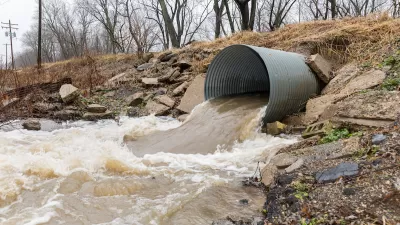
Southern Water Infrastructure at Risk From Climate Impacts
A water main breaks somewhere in the United States every two minutes, according to an estimate from the American Society of Civil Engineers.

California Water Plan Readies State for Climate-Impacted Future
A wet winter will replenish the state’s snowpack and reservoirs, but could also increase flooding and wildfire risk in some areas.

Pennsylvania Mall Conversion Bill Passes House
If passed, the bill would promote the adaptive reuse of defunct commercial buildings.

Coming Soon to Ohio: The Largest Agrivoltaic Farm in the US
The ambitious 6,000-acre project will combine an 800-watt solar farm with crop and livestock production.

World's Largest Wildlife Overpass In the Works in Los Angeles County
Caltrans will soon close half of the 101 Freeway in order to continue construction of the Wallis Annenberg Wildlife Crossing near Agoura Hills in Los Angeles County.

California Grid Runs on 100% Renewable Energy for Over 9 Hours
The state’s energy grid was entirely powered by clean energy for some portion of the day on 37 out of the last 45 days.

New Forecasting Tool Aims to Reduce Heat-Related Deaths
Two federal agencies launched a new, easy-to-use, color-coded heat warning system that combines meteorological and medical risk factors.

AI Traffic Management Comes to Dallas-Fort Worth
Several Texas cities are using an AI-powered platform called NoTraffic to help manage traffic signals to increase safety and improve traffic flow.
City of Costa Mesa
Licking County
Barrett Planning Group LLC
HUD's Office of Policy Development and Research
Mpact Transit + Community
HUD's Office of Policy Development and Research
Tufts University, Department of Urban and Environmental Policy & Planning
City of Universal City TX
ULI Northwest Arkansas

Urban Design for Planners 1: Software Tools
This six-course series explores essential urban design concepts using open source software and equips planners with the tools they need to participate fully in the urban design process.
Planning for Universal Design
Learn the tools for implementing Universal Design in planning regulations.
