


Matsys, an experimental architecture firm, used the book Dune as a starting point for its design of a terraced, sunken city form focused around preserving water.


From the project description: "In Frank Herbert's famous 1965 novel Dune, he describes a planet that has undergone nearly complete desertification. Dune has been called the 'first planetary ecology novel' and forecasts a dystopian world without water. The few remaining inhabitants have secluded themselves from their harsh environment in what could be called subterranean oasises. Far from idyllic, these havens, known as sietch, are essentially underground water storage banks. Water is wealth in this alternate reality. It is preciously conserved, rationed with strict authority, and secretly hidden and protected."
"Although this science fiction novel sounded alien in 1965, the concept of a water-poor world is quickly becoming a reality, especially in the American Southwest."
FULL STORY: Hexagonal Hydropolis

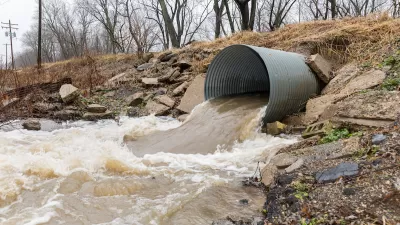
Southern Water Infrastructure at Risk From Climate Impacts
A water main breaks somewhere in the United States every two minutes, according to an estimate from the American Society of Civil Engineers.

California Water Plan Readies State for Climate-Impacted Future
A wet winter will replenish the state’s snowpack and reservoirs, but could also increase flooding and wildfire risk in some areas.

Fossil Fuel-Based Artificial Turf Raises Concerns
Cities and states are rolling back support for artificial turf, which can leach chemicals and microplastics into groundwater.
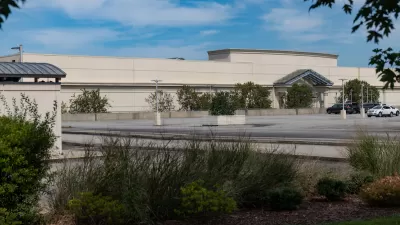
Pennsylvania Mall Conversion Bill Passes House
If passed, the bill would promote the adaptive reuse of defunct commercial buildings.

Planning for Accessibility: Proximity is More Important than Mobility
Accessibility-based planning minimizes the distance that people must travel to reach desired services and activities. Measured this way, increased density can provide more total benefits than increased speeds.
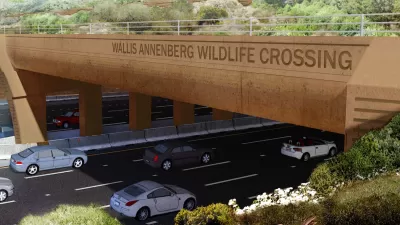
World's Largest Wildlife Overpass In the Works in Los Angeles County
Caltrans will soon close half of the 101 Freeway in order to continue construction of the Wallis Annenberg Wildlife Crossing near Agoura Hills in Los Angeles County.

Eviction Looms for Low-Income Tenants as Rent Debt Rises
Nonprofit housing operators across the country face almost $10 billion in rent debt.

Brightline West Breaks Ground
The high-speed rail line will link Las Vegas and the Los Angeles area.

Colorado Bans No-Fault Evictions
In most cases, landlords must provide a just cause for evicting tenants.
City of Costa Mesa
Licking County
Barrett Planning Group LLC
HUD's Office of Policy Development and Research
Mpact Transit + Community
HUD's Office of Policy Development and Research
Tufts University, Department of Urban and Environmental Policy & Planning
City of Universal City TX
ULI Northwest Arkansas

Urban Design for Planners 1: Software Tools
This six-course series explores essential urban design concepts using open source software and equips planners with the tools they need to participate fully in the urban design process.
Planning for Universal Design
Learn the tools for implementing Universal Design in planning regulations.
