


Mohamed Atta, one of the 9/11 terrorists, pursued a masters degree in city planning before the attacks. Slate's Daniel Brooks reads Atta's masters thesis, and finds a strain of anti-Western modernism that is revealing.


"The subject of the thesis is a section of Aleppo, Syria's second city. Atta describes decades of meddling by Western urban planners, who rammed highways through the neighborhood's historic urban fabric and replaced many of its once ubiquitous courtyard houses with modernist high-rises. Atta calls for rebuilding the area along traditional lines, all tiny shops and odd-angled cul-de-sacs. The highways and high-rises are to be removed-in the meticulous color-coded maps, they are all slated for demolition. Traditional courtyard homes and market stalls are to be rebuilt."
Thanks to Ariel Ben-Amos
FULL STORY: The Architect of 9/11: What Can We Learn About Mohamed Atta From His Work as a Student of Urban Planning?

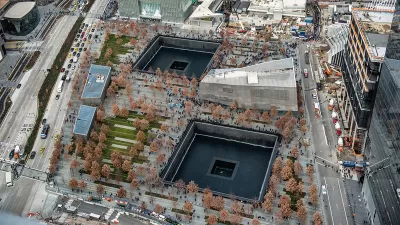
How 9/11 Inspired Public Service as an Urban Planner
The account of how the terror and tragedy of 9/11 led an urban planner from working for a private consulting firm to working in the public sector.
Historic Preservation and 9/11
Erica Stewart of the National Trust for Historic Preservation runs down a few of the ways that rebuilding efforts after the attacks on 9/11 took historic preservation into account.

20 Years After 9/11: The 'Age of Skyscrapers' Is Nowhere Near Over
Despite predictions that the events of September 11, 2001 would be the end of skyscrapers, U.S. cities are building more tall buildings than ever.
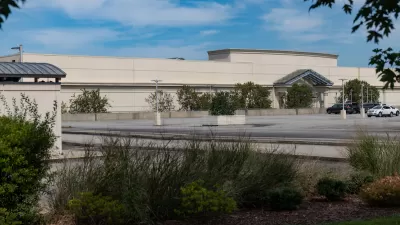
Pennsylvania Mall Conversion Bill Passes House
If passed, the bill would promote the adaptive reuse of defunct commercial buildings.
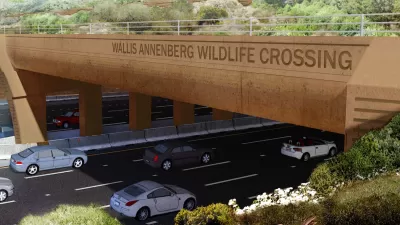
World's Largest Wildlife Overpass In the Works in Los Angeles County
Caltrans will soon close half of the 101 Freeway in order to continue construction of the Wallis Annenberg Wildlife Crossing near Agoura Hills in Los Angeles County.

U.S. Supreme Court: California's Impact Fees May Violate Takings Clause
A California property owner took El Dorado County to state court after paying a traffic impact fee he felt was exorbitant. He lost in trial court, appellate court, and the California Supreme Court denied review. Then the U.S. Supreme Court acted.

New York’s Deadliest Neighborhoods for Pedestrians
Pedestrian deaths rose last year, but remain below pre-2020 levels.

Eviction Looms for Low-Income Tenants as Rent Debt Rises
Nonprofit housing operators across the country face almost $10 billion in rent debt.

Brightline West Breaks Ground
The high-speed rail line will link Las Vegas and the Los Angeles area.
City of Costa Mesa
Licking County
Barrett Planning Group LLC
HUD's Office of Policy Development and Research
Mpact Transit + Community
HUD's Office of Policy Development and Research
Tufts University, Department of Urban and Environmental Policy & Planning
City of Universal City TX
ULI Northwest Arkansas

Urban Design for Planners 1: Software Tools
This six-course series explores essential urban design concepts using open source software and equips planners with the tools they need to participate fully in the urban design process.
Planning for Universal Design
Learn the tools for implementing Universal Design in planning regulations.
