


As farmland prices skyrocketed, so did the cost of growing a suburb.


Concerned with sprawl in in the 1980's, the Metropolitan Council in Minneapolis considered following the lead of Portland, Oregon by creating an Urban Growth Boundary. Framers owning land with sewer capacity outside the boundary knew that its value had just greatly increased. And when the supply of land is limited, they can name their own price.
"In the past, builders would look at the price of a finished lot, and assume that the house they built on it would cost a maximum of four times the finished lot price; a sort of "one-quarter" rule for land costs. If the lot cost $30,000, they would not build a home that ultimately cost more than $120,000.
The cost for the remaining buildable area would have been about $300,000 an acre. The numbers simply did not work out. Land prices had reached the breaking point. Since there was no possible way to profit, my 5% of zero would still be zero. I suggested that my client not do the deal, and saved him from financial ruin."
FULL STORY: Farmland Prices: The Cost of Growing A Suburb

Urban Agriculture Craze Boon to Farmers in Japan
Japan's yard-less city dwellers are increasingly drawn to "weekend farming" plots rented from commercial farmers on the urban fringe. Could it help the country's struggling agriculture sector? Kenji Hall reports.
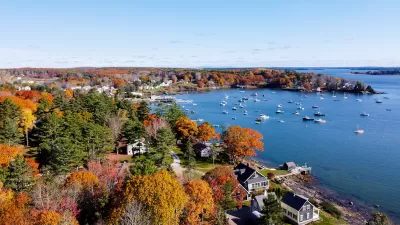
Maine Law Promotes Smart Growth
New state legislation encourages cities to plan around ‘smart growth’ principles to preserve farmland and open space, and use infill development to build more housing.
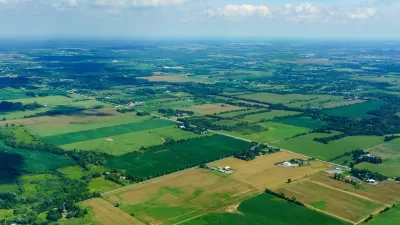
Auditor: Toronto Greenbelt Changes Favored Developers
A series of hasty removals of land from the protected Greenbelt last year were pushed through without environmental or financial analysis.
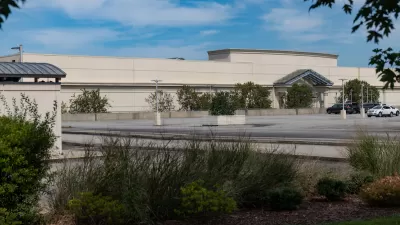
Pennsylvania Mall Conversion Bill Passes House
If passed, the bill would promote the adaptive reuse of defunct commercial buildings.
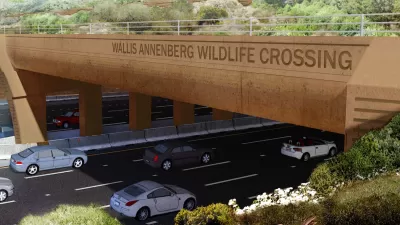
World's Largest Wildlife Overpass In the Works in Los Angeles County
Caltrans will soon close half of the 101 Freeway in order to continue construction of the Wallis Annenberg Wildlife Crossing near Agoura Hills in Los Angeles County.

U.S. Supreme Court: California's Impact Fees May Violate Takings Clause
A California property owner took El Dorado County to state court after paying a traffic impact fee he felt was exorbitant. He lost in trial court, appellate court, and the California Supreme Court denied review. Then the U.S. Supreme Court acted.

California Grid Runs on 100% Renewable Energy for Over 9 Hours
The state’s energy grid was entirely powered by clean energy for some portion of the day on 37 out of the last 45 days.

New Forecasting Tool Aims to Reduce Heat-Related Deaths
Two federal agencies launched a new, easy-to-use, color-coded heat warning system that combines meteorological and medical risk factors.

AI Traffic Management Comes to Dallas-Fort Worth
Several Texas cities are using an AI-powered platform called NoTraffic to help manage traffic signals to increase safety and improve traffic flow.
City of Costa Mesa
Licking County
Barrett Planning Group LLC
HUD's Office of Policy Development and Research
Mpact Transit + Community
HUD's Office of Policy Development and Research
Tufts University, Department of Urban and Environmental Policy & Planning
City of Universal City TX
ULI Northwest Arkansas

Urban Design for Planners 1: Software Tools
This six-course series explores essential urban design concepts using open source software and equips planners with the tools they need to participate fully in the urban design process.
Planning for Universal Design
Learn the tools for implementing Universal Design in planning regulations.
