


A review of Retrofitting Suburbia: Urban Design Solutions for Redesigning Suburbs by Ellen Dunham-Jones and June Williamson, from Residential Architect Online.


"Dunham-Jones and Williamson argue that retrofitting defunct or failing malls, parking lots, commercial strips, office parks, and cul-de-sac subdivisions from single-use, auto-dependent, low-density suburbs into vital and diverse higher-density, mixed-use urban centers is the best and most sustainable solution for accommodating evolving demographics, technological advances, and economic conditions. The projects highlighted were chosen for their real-world application of new trends in planning, development, economics, policy, and design.
Why are suburban retrofits such a good solution? As Dunham-Jones said in a discussion of the book, "There are benefits at several different scales."
At some point, the book contends, we'll have to accept that transportation costs aren't getting any lower. Household budgets would benefit from the reduced transportation costs that urbanized suburban neighborhoods provide through improved walkability and access to mass transit, as well as their ability to reduce the number and length of car trips needed to reach the more-plentiful services and retail allowed by redevelopment. "With good mixed-use development, you can capture between 25 and 45 percent of the trips internally," Dunham-Jones says."
FULL STORY: redesigning suburbia for a changing world

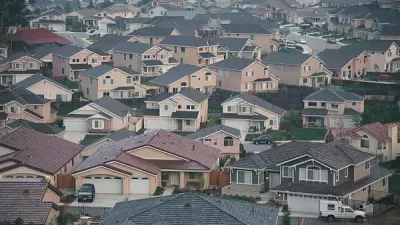
The Suburbs Are Deficient Because We Made Them That Way
With their unhealthy environments, unsustainability, and relatively poor return on investment, "the suburbs" are an easy target for criticism. But suburbs aren't inherently inadequate, says David Levinson, they suffer from poor postwar urban design.
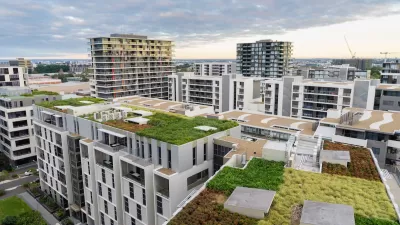
Where Urban Design Is Headed in 2024
A forecast of likely trends in urban design and architecture.

Considering Mindfulness as an Urban Planner's Tool
A recent blog post in Substack considers the appropriation of mindfulness to urban observation and, implicitly, urban planning today.

Depopulation Patterns Get Weird
A recent ranking of “declining” cities heavily features some of the most expensive cities in the country — including New York City and a half-dozen in the San Francisco Bay Area.
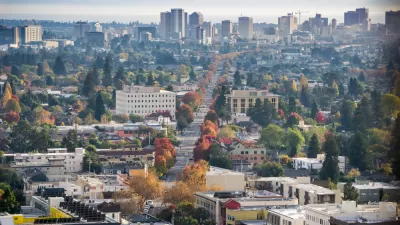
California Exodus: Population Drops Below 39 Million
Never mind the 40 million that demographers predicted the Golden State would reach by 2018. The state's population dipped below 39 million to 38.965 million last July, according to Census data released in March, the lowest since 2015.
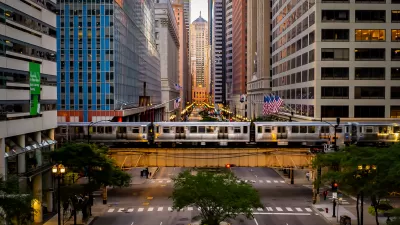
Chicago to Turn High-Rise Offices into Housing
Four commercial buildings in the Chicago Loop have been approved for redevelopment into housing in a bid to revitalize the city’s downtown post-pandemic.

Median Home Prices Top $1 Million in Over 200 California Towns
Towns once known for their affordability are seeing sharply rising home prices.

LA County Receives Reconnecting Communities Grants
Seven grant awards totaling $162 million will be used for planning, capital projects, and regional partnerships to reduce environmental harm and improve access in disadvantaged communities.

Seine Pollution Could Hinder Olympic Swim Events
Events like the triathlon could be impacted if tests continue to reveal high levels of dangerous bacteria in Paris’ famous river.
City of Costa Mesa
Licking County
Barrett Planning Group LLC
HUD's Office of Policy Development and Research
Mpact Transit + Community
HUD's Office of Policy Development and Research
City of Universal City TX
ULI Northwest Arkansas
City of Laramie, Wyoming

Urban Design for Planners 1: Software Tools
This six-course series explores essential urban design concepts using open source software and equips planners with the tools they need to participate fully in the urban design process.
Planning for Universal Design
Learn the tools for implementing Universal Design in planning regulations.
