


Philadelphia's SugerHouse waterfront development could learn a thing or two from San Francisco's Mission Bay neighborhood, according to this piece.


"Mission Bay is easily one of the best new waterfront neighborhoods in America, with 2,700 new condos already built. Yet a mere 10 years ago, the place didn't exist. It was 300 acres of raw brownfields, populated by a few hardened pioneers living on houseboats in Mission Creek.
Clearly, San Francisco didn't get its waterfront to this point by following the SugarHouse model.
The Nutter administration took some heat last week for signing off on the gaming operator's plan to build a suburban-style box surrounded by acres of asphalt parking just south of Penn Treaty Park. Public anger would be more fairly directed at Gov. Rendell, who prefers easy money to real development, and who imposed this crummy slots barn on the Delaware waterfront.
But even a master plan doesn't guarantee that Philadelphia will produce its version of Mission Bay. San Francisco's plan was in place for years before development took off.
How did San Francisco do it? Obviously, the explosive growth in nearby Silicon Valley and the city's famously tight housing market helped make Mission Bay attractive to developers. In 2000, the opening of the Giants' AT&T Park, set firmly within the city grid, helped focus attention on the neighborhood. So did the extension of an urbane light-rail line."
FULL STORY: Changing Skyline: Some waterfront lessons from the City by the Bay


Philly Waterfront Park Breaks Ground
Penn’s Landing is an ambitious redesign of 11.5 waterfront acres.
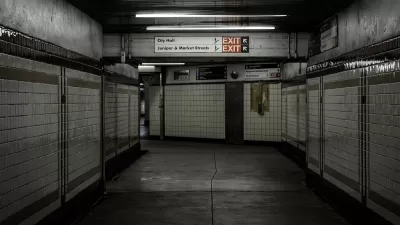
How Transit Architecture Impacts Real and Perceived Safety
More than a third of Americans believe major transit systems are too unsafe to ride. The built environment can change that.

New Philly Fare Gates ‘Astonishingly Easy to Beat’
A set of high-tech gates aimed at limiting fare evasion is already failing.
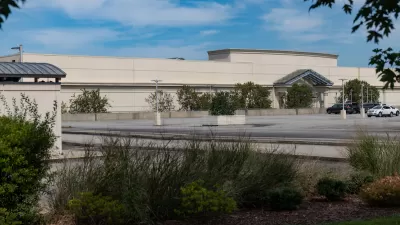
Pennsylvania Mall Conversion Bill Passes House
If passed, the bill would promote the adaptive reuse of defunct commercial buildings.
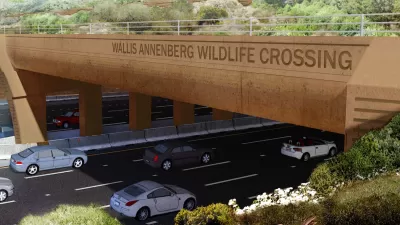
World's Largest Wildlife Overpass In the Works in Los Angeles County
Caltrans will soon close half of the 101 Freeway in order to continue construction of the Wallis Annenberg Wildlife Crossing near Agoura Hills in Los Angeles County.

U.S. Supreme Court: California's Impact Fees May Violate Takings Clause
A California property owner took El Dorado County to state court after paying a traffic impact fee he felt was exorbitant. He lost in trial court, appellate court, and the California Supreme Court denied review. Then the U.S. Supreme Court acted.

California Grid Runs on 100% Renewable Energy for Over 9 Hours
The state’s energy grid was entirely powered by clean energy for some portion of the day on 37 out of the last 45 days.

New Forecasting Tool Aims to Reduce Heat-Related Deaths
Two federal agencies launched a new, easy-to-use, color-coded heat warning system that combines meteorological and medical risk factors.

AI Traffic Management Comes to Dallas-Fort Worth
Several Texas cities are using an AI-powered platform called NoTraffic to help manage traffic signals to increase safety and improve traffic flow.
City of Costa Mesa
Licking County
Barrett Planning Group LLC
HUD's Office of Policy Development and Research
Mpact Transit + Community
HUD's Office of Policy Development and Research
Tufts University, Department of Urban and Environmental Policy & Planning
City of Universal City TX
ULI Northwest Arkansas

Urban Design for Planners 1: Software Tools
This six-course series explores essential urban design concepts using open source software and equips planners with the tools they need to participate fully in the urban design process.
Planning for Universal Design
Learn the tools for implementing Universal Design in planning regulations.
