


Amid growing concern that downtown Vancouver's mandated view corridors cost too much development while making too little sense, its planners are once again debating their necessity.


"'I've got a serious appetite for shifting those view corridors,' says Brent Toderian, a former Calgary planner hired two years ago, who has been working hard to set new directions in a city famous for its urban planning. "The view corridors have been one of the most monumental city-shaping tools in Vancouver's history but they need to be looked at again. We have a mountain line and we have a building line where that line is inherently subjective."
The issue isn't just about preserving views versus giving architects free rein. Vancouver has used height and density bonuses to developers with increasing frequency in return for all kinds of community benefits, including daycares, parks, theatres and social housing. A height limit means less to trade for those amenities."
"The view-corridor policy, formally adopted in 1989, was the result of public complaints over some tall buildings going up, including Harbour Centre, which is now, with its tower and revolving restaurant, seen as a defining part of the Vancouver skyline. But then, it helped spur a public consultation process and policy development that many say confused the goal of preserving views with a mathematical set of rules that often didn't make sense."
FULL STORY: City planners take new look at urban vistas

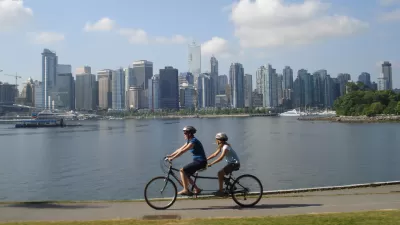
Learning from Vancouver’s Planning Successes
Vancouver’s reputation as a beautiful “mini-Manhattan” is well documented and well earned. But how did the city manage to fend off regrettable fashions in planning over the years, and how prepared is it to continue its success in the future?

Braille Signage Now at All Vancouver Bus Stops
The city completed installation of signage for people with visual impairments at over 8,000 bus stops.

Vancouver Day Care Rejection Poses Larger Questions
What does it mean for cities and civic life when neighborhoods are viewed as products geared for individual consumption rather than ever-evolving communities?
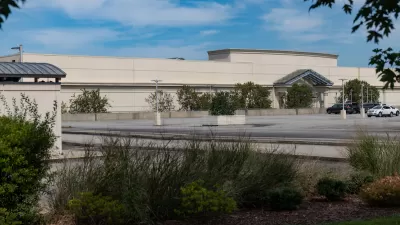
Pennsylvania Mall Conversion Bill Passes House
If passed, the bill would promote the adaptive reuse of defunct commercial buildings.
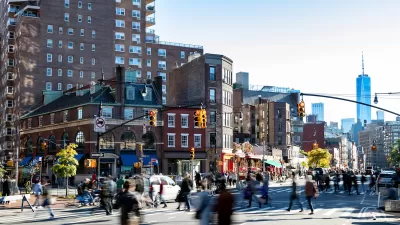
Planning for Accessibility: Proximity is More Important than Mobility
Accessibility-based planning minimizes the distance that people must travel to reach desired services and activities. Measured this way, increased density can provide more total benefits than increased speeds.
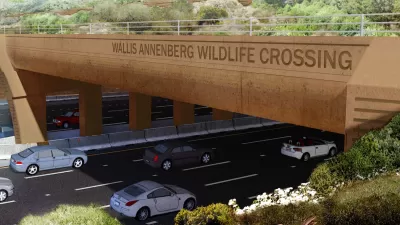
World's Largest Wildlife Overpass In the Works in Los Angeles County
Caltrans will soon close half of the 101 Freeway in order to continue construction of the Wallis Annenberg Wildlife Crossing near Agoura Hills in Los Angeles County.

Eviction Looms for Low-Income Tenants as Rent Debt Rises
Nonprofit housing operators across the country face almost $10 billion in rent debt.

Brightline West Breaks Ground
The high-speed rail line will link Las Vegas and the Los Angeles area.

Colorado Bans No-Fault Evictions
In most cases, landlords must provide a just cause for evicting tenants.
City of Costa Mesa
Licking County
Barrett Planning Group LLC
HUD's Office of Policy Development and Research
Mpact Transit + Community
HUD's Office of Policy Development and Research
Tufts University, Department of Urban and Environmental Policy & Planning
City of Universal City TX
ULI Northwest Arkansas

Urban Design for Planners 1: Software Tools
This six-course series explores essential urban design concepts using open source software and equips planners with the tools they need to participate fully in the urban design process.
Planning for Universal Design
Learn the tools for implementing Universal Design in planning regulations.
