


Due to consumers cutting back, the global market for recyclables has collapsed and even begun to cost some cities' recycling programs.


"Mountains of paper are now piling up in warehouses across the US. A handful of recyclers have already gone out of business. If prices don't rebound soon, taxpayers could see their recycling bills increase as cities decide to follow Fountain Inn's lead and cut back their recycling programs – once a reliable revenue source – or start paying to keep them. "
"Still, there's some optimism that the current crisis will be short-lived. Cities can expect less revenue from its recycling operations, but recycling won't simply disappear, says Jorge Santiesteban, solid resources manager for the city of Los Angeles.
In the short term, domestic recyclers can recoup some losses by charging higher collection fees – as Fountain Inn did. And most large cities negotiate long-term contracts with minimum prices to keep revenue flowing.
Some states are mulling systemic changes, like requiring domestic producers to use more recycled material in their products. In California, says Mr Santiesteban, there is an awareness that "the infrastructure has to be rebuilt" to make it less reliant on the export market. "
FULL STORY: Economic crisis hits city recycling

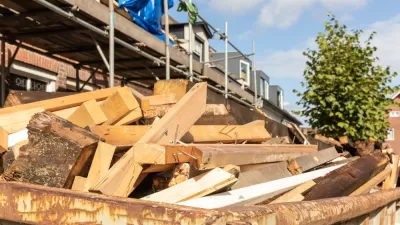
The Link Between Circular Building, Affordability, and Sustainability
A growing movement seeks to reduce waste in the construction industry and focus on the long-term impact of building materials.
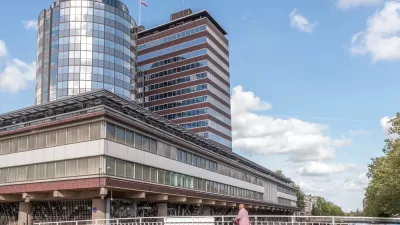
The Cradle-to-Cradle Approach to Building
The circular economy. Cradle-to-cradle. The regenerative economy. Whatever you call it, an approach to building that eliminates waste would transform the next generation of the built environment.

Why Urban Areas Need Increased Access to Recycling
In most residential areas across the United States, recycling is encouraged and offered as a way for residents to sustainably dispose of certain materials. But how many residents actually participate in their local recycling efforts?
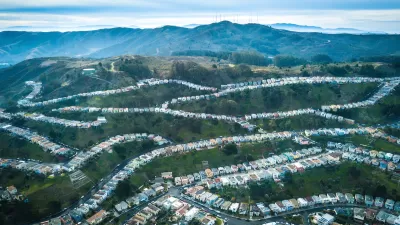
Depopulation Patterns Get Weird
A recent ranking of “declining” cities heavily features some of the most expensive cities in the country — including New York City and a half-dozen in the San Francisco Bay Area.
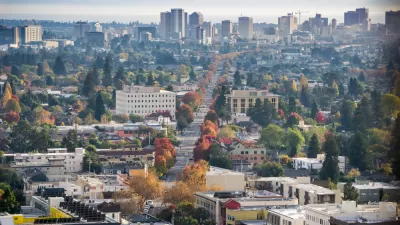
California Exodus: Population Drops Below 39 Million
Never mind the 40 million that demographers predicted the Golden State would reach by 2018. The state's population dipped below 39 million to 38.965 million last July, according to Census data released in March, the lowest since 2015.
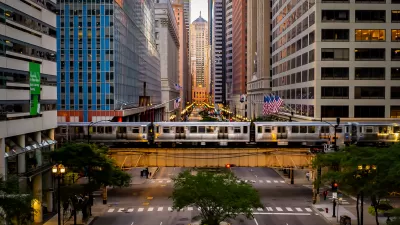
Chicago to Turn High-Rise Offices into Housing
Four commercial buildings in the Chicago Loop have been approved for redevelopment into housing in a bid to revitalize the city’s downtown post-pandemic.

Chicago Awarded $2M Reconnecting Communities Grant
Community advocates say the city’s plan may not do enough to reverse the negative impacts of a major expressway.

New Park Opens in the Santa Clarita Valley
The City of Santa Clarita just celebrated the grand opening of its 38th park, the 10.5-acre Skyline Ranch Park.

U.S. Supreme Court: California's Impact Fees May Violate Takings Clause
A California property owner took El Dorado County to state court after paying a traffic impact fee he felt was exorbitant. He lost in trial court, appellate court, and the California Supreme Court denied review. Then the U.S. Supreme Court acted.
City of Costa Mesa
Licking County
Barrett Planning Group LLC
HUD's Office of Policy Development and Research
Mpact Transit + Community
HUD's Office of Policy Development and Research
City of Universal City TX
ULI Northwest Arkansas
Town of Zionsville

Urban Design for Planners 1: Software Tools
This six-course series explores essential urban design concepts using open source software and equips planners with the tools they need to participate fully in the urban design process.
Planning for Universal Design
Learn the tools for implementing Universal Design in planning regulations.
