


One architecture critic addresses two skyscraper-related conundrums: Decorative lighting that tops the buildings are energy inefficient, and they are dangerous to migrating birds.


"New York structural engineer David Scott, the chairman of the Chicago-based Council on Tall Buildings and Urban Habitat, put that point in a broader context when I reached him by phone on Monday.
'If you just turned everything off, you would lose a lot of the [urban] vibrancy,' he said. 'If you weigh up the efficiencies you get by people working and living in a city, particularly a city that's served by public transport, you can afford to be generous with some of the lighting.' Many skyscrapers around the world, particularly in Hong Kong, are now lit with LEDs that use far less energy than conventional spotlights, he added.
Call it the 'bright lights, big city' theory of urban planning: By doing a modest amount of decorative lighting, either atop of a building or in places that accent key architectural features, you prevent the city from feeling like a ghost town. That encourages more people live in dense urban areas. And density saves energy. You spend a little energy to save a lot of energy.
A green city is not a blacked-out city."
FULL STORY: Must skyscrapers be bird-killers? Not necessarily

Toronto's Skyline Has High Ambitions Despite Housing Bubble Concerns
By a ratio of two-to-one, Toronto is far outpacing NYC in terms of high-rises and skyscrapers currently under construction. As other Canadian cities follow suit, Jim Flaherty, Canada's Finance Minister, is taking measures to cool the market.
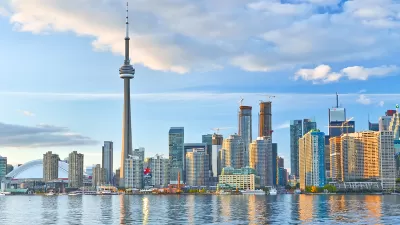
‘Skyscraper Race’ Underway in Toronto
No skyline in North America has changed as drastically as Toronto’s in recent decades. A slate of new skyscraper proposals, called a “skyscraper race” by observers, could continue the trend.
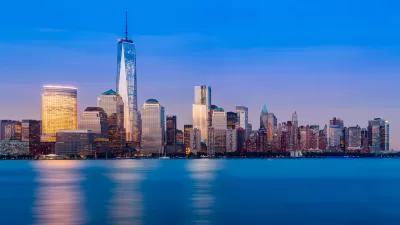
20 Years After 9/11: The 'Age of Skyscrapers' Is Nowhere Near Over
Despite predictions that the events of September 11, 2001 would be the end of skyscrapers, U.S. cities are building more tall buildings than ever.

Depopulation Patterns Get Weird
A recent ranking of “declining” cities heavily features some of the most expensive cities in the country — including New York City and a half-dozen in the San Francisco Bay Area.
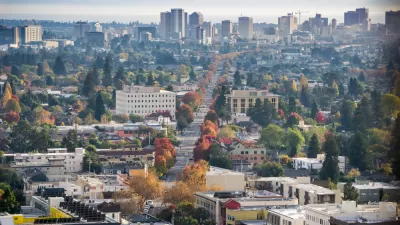
California Exodus: Population Drops Below 39 Million
Never mind the 40 million that demographers predicted the Golden State would reach by 2018. The state's population dipped below 39 million to 38.965 million last July, according to Census data released in March, the lowest since 2015.
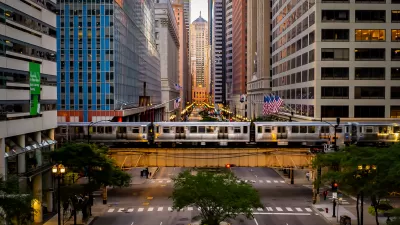
Chicago to Turn High-Rise Offices into Housing
Four commercial buildings in the Chicago Loop have been approved for redevelopment into housing in a bid to revitalize the city’s downtown post-pandemic.

Google Maps Introduces New Transit, EV Features
It will now be easier to find electric car charging stations and transit options.

Ohio Lawmakers Propose Incentivizing Housing Production
A proposed bill would take a carrot approach to stimulating housing production through a grant program that would reward cities that implement pro-housing policies.

Chicago Awarded $2M Reconnecting Communities Grant
Community advocates say the city’s plan may not do enough to reverse the negative impacts of a major expressway.
City of Costa Mesa
Licking County
Barrett Planning Group LLC
HUD's Office of Policy Development and Research
Mpact Transit + Community
HUD's Office of Policy Development and Research
City of Universal City TX
ULI Northwest Arkansas
Town of Zionsville

Urban Design for Planners 1: Software Tools
This six-course series explores essential urban design concepts using open source software and equips planners with the tools they need to participate fully in the urban design process.
Planning for Universal Design
Learn the tools for implementing Universal Design in planning regulations.
