


Founded in the 1880s, Eatonville, FL was the first all-African American town to be incorporated in the U.S. It is also the childhood home of writer Zora Neale Hurston. Today, the community strives to balance its history and the future.


"Eatonville has long been defined as a paradox of triumph and struggle. It is both a historic model of black empowerment and a community of nearly 2,400 where the poverty rates are twice the national average. It is a literary hub but also an oak-shaded example of rural Southern black culture - sometimes disdained, sometimes praised - that was born of American slavery. Not surprisingly, residents here are both proud and protective."
"[I]n many ways, the town [Zora Neale Hurston] described - and made a tourist stop by including it in the Florida travel guide produced by the Depression-era Federal Writers' Project - remains a place apart. It is as independent, dignified and private as it was in the 1930s, when Hurston wrote that rural blacks in Florida often resisted sharing their true thoughts with the white man, who 'knowing so little about us, he doesn't know what he is missing.'"
FULL STORY: In a Town Apart, the Pride and Trials of Black Life

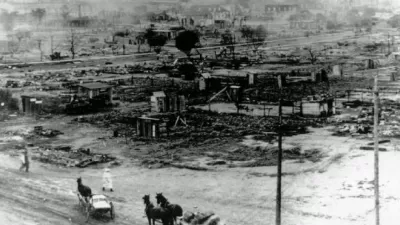
The Tulsa Race Massacre: A Century Later
On the hundred-year anniversary of the violence that destroyed Tulsa's "Black Wall Street," the country is finally reckoning with the legacy of one of the most destructive racially motivated riots in U.S. history.
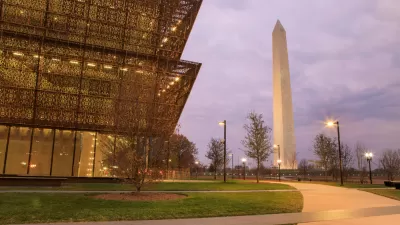
Inside the National Museum of African American History
Sights and scenes from the inside of Washington, D.C.'s National Museum of African American History and Culture.
Gentrification and the Bay Area's Controversial Growth Management Plan
Is gentrification the inevitable result of land use planning that reduces greenhouse gas emissions by favoring infill development over auto-dependent sprawl? The Urban Displacement Project looks at the unintended effects of Plan Bay Area.

Coming Soon to Ohio: The Largest Agrivoltaic Farm in the US
The ambitious 6,000-acre project will combine an 800-watt solar farm with crop and livestock production.
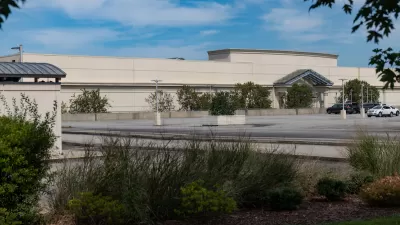
Pennsylvania Mall Conversion Bill Passes House
If passed, the bill would promote the adaptive reuse of defunct commercial buildings.

U.S. Supreme Court: California's Impact Fees May Violate Takings Clause
A California property owner took El Dorado County to state court after paying a traffic impact fee he felt was exorbitant. He lost in trial court, appellate court, and the California Supreme Court denied review. Then the U.S. Supreme Court acted.

How Freeway Projects Impact Climate Resilience
In addition to displacement and public health impacts, highway expansions can also make communities less resilient to flooding and other climate-related disasters.

California Grid Runs on 100% Renewable Energy for Over 9 Hours
The state’s energy grid was entirely powered by clean energy for some portion of the day on 37 out of the last 45 days.

New Forecasting Tool Aims to Reduce Heat-Related Deaths
Two federal agencies launched a new, easy-to-use, color-coded heat warning system that combines meteorological and medical risk factors.
City of Costa Mesa
Licking County
Barrett Planning Group LLC
HUD's Office of Policy Development and Research
Mpact Transit + Community
HUD's Office of Policy Development and Research
Tufts University, Department of Urban and Environmental Policy & Planning
City of Universal City TX
ULI Northwest Arkansas

Urban Design for Planners 1: Software Tools
This six-course series explores essential urban design concepts using open source software and equips planners with the tools they need to participate fully in the urban design process.
Planning for Universal Design
Learn the tools for implementing Universal Design in planning regulations.
