


A recent study has named the "smartest" cities in Canada.


"The Canadian Council on Learning's annual Composite Learning Index, now in its third year, is created with data from 25 indicators, which in turn are grouped into four "pillars" of learning, originally developed by the United Nations Educational, Scientific and Cultural Organization (UNESCO). The "learning to know" pillar focuses on formal education. It includes university attainment, high-school dropout rates, the proportion of youth who pursue post-secondary studies, and the math, science, reading and problem solving scores of teenagers. "Learning to do," the second pillar, focuses on applied skills. It looks at the number of local vocational schools and the proportion of employees who have access to workplace training. The "learning to live together" pillar attempts to measure the social values in a community. It looks at things like the proportion of Canadians who volunteer, as well as participation in clubs, and the percentage who socialize with other cultures. The last pillar, the "learning to be" pillar, looks at cultural opportunities, and includes spending on books, museums, the arts, sports and recreation, as well as access to cultural resources."
"How your city scores could have a big impact on your life. For starters, if your city ranks higher, 'you'll make more money,' says Kevin Stolarick, research director of the Martin Prosperity Institute in Toronto, who studies communities and worked on the forthcoming Canadian edition of Who's Your City? with demographer Richard Florida. 'You will become a more skilled, educated and talented individual, and that's going to be reflected in the money you make.' Adds Dale Kirby, education professor at Memorial University in St. John's, 'we've seen consistently from the OECD that if you have a higher level of education among a population you're going to be doing reasonably well economically.'"
FULL STORY: Canada's smartest cities


Planetizen’s Top Planning Books of 2023
The world is changing, and planning with it.

How AI Envisions American Neighborhoods
How well does artificial intelligence ‘get’ U.S. cities?
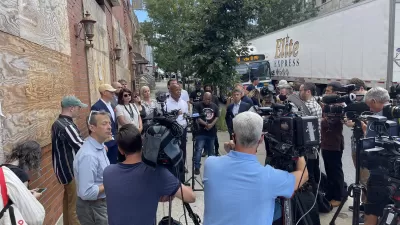
U.S. Mayors List Infrastructure as 2023’s Top Concern
The National League of Cities (NLC) has published an analysis of mayoral speeches from various U.S. cities, along with Census data and resident sentiments, in the latest edition of the annual “State of the Cities” report.
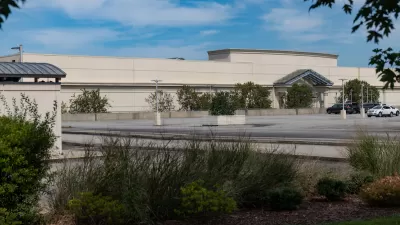
Pennsylvania Mall Conversion Bill Passes House
If passed, the bill would promote the adaptive reuse of defunct commercial buildings.
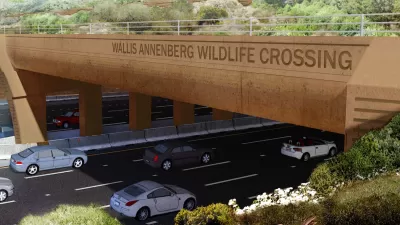
World's Largest Wildlife Overpass In the Works in Los Angeles County
Caltrans will soon close half of the 101 Freeway in order to continue construction of the Wallis Annenberg Wildlife Crossing near Agoura Hills in Los Angeles County.

U.S. Supreme Court: California's Impact Fees May Violate Takings Clause
A California property owner took El Dorado County to state court after paying a traffic impact fee he felt was exorbitant. He lost in trial court, appellate court, and the California Supreme Court denied review. Then the U.S. Supreme Court acted.

California Grid Runs on 100% Renewable Energy for Over 9 Hours
The state’s energy grid was entirely powered by clean energy for some portion of the day on 37 out of the last 45 days.

New Forecasting Tool Aims to Reduce Heat-Related Deaths
Two federal agencies launched a new, easy-to-use, color-coded heat warning system that combines meteorological and medical risk factors.

AI Traffic Management Comes to Dallas-Fort Worth
Several Texas cities are using an AI-powered platform called NoTraffic to help manage traffic signals to increase safety and improve traffic flow.
City of Costa Mesa
Licking County
Barrett Planning Group LLC
HUD's Office of Policy Development and Research
Mpact Transit + Community
HUD's Office of Policy Development and Research
Tufts University, Department of Urban and Environmental Policy & Planning
City of Universal City TX
ULI Northwest Arkansas

Urban Design for Planners 1: Software Tools
This six-course series explores essential urban design concepts using open source software and equips planners with the tools they need to participate fully in the urban design process.
Planning for Universal Design
Learn the tools for implementing Universal Design in planning regulations.
