


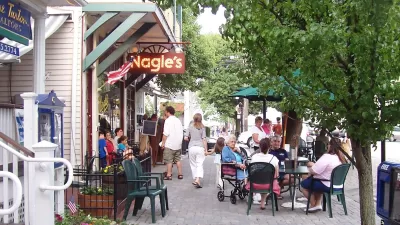
A new study by the University of Utah shows that people who live in walkable neighborhoods are more likely to be leaner than those who live in auto-oriented areas.


"Mark Vlasic and his family weren't thinking about walkability when they moved into Salt Lake City's east Liberty Park neighborhood several years ago. But its pedestrian-friendly, tree-lined streets and proximity to work, parks and local businesses have enhanced the family's life.
'We've been recreating by biking around the neighborhood. We've discovered a new way of enjoying the city that is becoming part of our family entertainment,' said Vlasic, a landscape architect with two teenage daughters. His Browning Avenue home is midway between his office in Sugar House and his wife's downtown workplace. With spiralling gasoline prices driving up the cost of commuting, they have stepped up their use of leg-powered transportation to get to work.
It's hardly surprising, then, that a new University of Utah study suggests that older, walkable neighborhoods like the Vlasics' aren't just convenient and cost effective, but healthier as well. Crunching data on nearly 500,000 Salt Lake County driver licenses, researchers documented a strong correlation between residents' body-mass index and the kind of urban environment they inhabit. Those who live in walkable neighborhoods are leaner than those in newer areas designed around automobiles, according to the study, published today in the American Journal of Preventative Medicine."
FULL STORY: U. study finds the perks of living in old, walkable urban areas

Mixed-Use Development as an Obesity Reduction Tool
An introductory lesson in mixed-use development produces lessons and resources for obesity reduction.
Planning for Fitness in Oklahoma City
Six years ago, the 620-square-mile city had not one bike lane and forty McDonald's franchises.
'Obesity Warrior' Outlines Path to Increased Physical Activity
James Sallis, this year’s winner of the Bloomberg Manulife Prize for the Promotion of Active Health, discusses the obstacles to increasing opportunities for physical activity in our communities, and how to overcome them.
Depopulation Patterns Get Weird
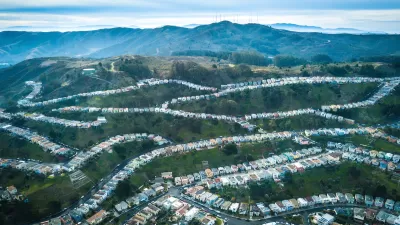
A recent ranking of “declining” cities heavily features some of the most expensive cities in the country — including New York City and a half-dozen in the San Francisco Bay Area.
California Exodus: Population Drops Below 39 Million
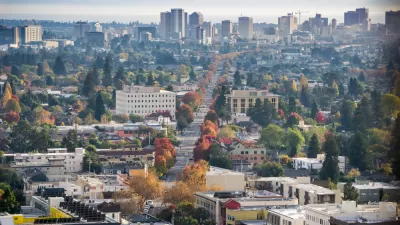
Never mind the 40 million that demographers predicted the Golden State would reach by 2018. The state's population dipped below 39 million to 38.965 million last July, according to Census data released in March, the lowest since 2015.

Chicago to Turn High-Rise Offices into Housing
Four commercial buildings in the Chicago Loop have been approved for redevelopment into housing in a bid to revitalize the city’s downtown post-pandemic.

Median Home Prices Top $1 Million in Over 200 California Towns
Towns once known for their affordability are seeing sharply rising home prices.

LA County Receives Reconnecting Communities Grants
Seven grant awards totaling $162 million will be used for planning, capital projects, and regional partnerships to reduce environmental harm and improve access in disadvantaged communities.

Seine Pollution Could Hinder Olympic Swim Events
Events like the triathlon could be impacted if tests continue to reveal high levels of dangerous bacteria in Paris’ famous river.
City of Costa Mesa
Licking County
Barrett Planning Group LLC
HUD's Office of Policy Development and Research
Mpact Transit + Community
HUD's Office of Policy Development and Research
City of Universal City TX
ULI Northwest Arkansas
City of Laramie, Wyoming

Urban Design for Planners 1: Software Tools
This six-course series explores essential urban design concepts using open source software and equips planners with the tools they need to participate fully in the urban design process.
Planning for Universal Design
Learn the tools for implementing Universal Design in planning regulations.
