


Steve Rose argues that the time may be ripe for a new respect for brutalism, the mid-century architectural movement that planners love to hate.


"No PR firm would have dreamt up the word "brutalism". The term was derived from Le Corbusier's "Béton brut"- French for "raw concrete", the movement's preferred material - rather than anything to do with brutality, with which it has sadly become better associated. In the popular imagination, brutalism is synonymous with harsh, hostile, ugly architecture (or death metal). Two key examples of the movement are currently under threat, Birmingham Central Library and Robin Hood Gardens, and both have sparked furious debate."
FULL STORY: Don't knock brutalism

Why Ugly Buildings Matter
Llewellyn Hinkes-Jones makes a strong argument for why ugly buildings deserve some love.

How the Drive for Profit Flattens the American Landscape
Mass-market production and the commodification of housing has led to a ‘flattening’ of design into a limited set of bland, homogeneous options.

Sea Ranch's Changing Architectural Vision
The progressive Northern California project is adapting to the times.

Pennsylvania Mall Conversion Bill Passes House
If passed, the bill would promote the adaptive reuse of defunct commercial buildings.

Planning for Accessibility: Proximity is More Important than Mobility
Accessibility-based planning minimizes the distance that people must travel to reach desired services and activities. Measured this way, increased density can provide more total benefits than increased speeds.
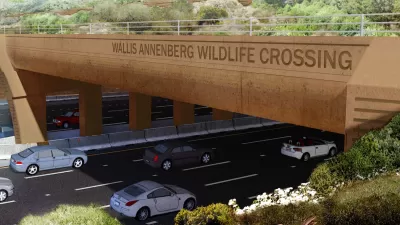
World's Largest Wildlife Overpass In the Works in Los Angeles County
Caltrans will soon close half of the 101 Freeway in order to continue construction of the Wallis Annenberg Wildlife Crossing near Agoura Hills in Los Angeles County.

Eviction Looms for Low-Income Tenants as Rent Debt Rises
Nonprofit housing operators across the country face almost $10 billion in rent debt.

Brightline West Breaks Ground
The high-speed rail line will link Las Vegas and the Los Angeles area.

Colorado Bans No-Fault Evictions
In most cases, landlords must provide a just cause for evicting tenants.
City of Costa Mesa
Licking County
Barrett Planning Group LLC
HUD's Office of Policy Development and Research
Mpact Transit + Community
HUD's Office of Policy Development and Research
Tufts University, Department of Urban and Environmental Policy & Planning
City of Universal City TX
ULI Northwest Arkansas

Urban Design for Planners 1: Software Tools
This six-course series explores essential urban design concepts using open source software and equips planners with the tools they need to participate fully in the urban design process.
Planning for Universal Design
Learn the tools for implementing Universal Design in planning regulations.
