


Empty retail space increased dramatically over the last six months, according to data compiled by commercial real estate brokers and investment advisors.


"Chain retailers have announced plans to close more than 6,500 outlets by year's end, even as shopping center construction continues at a furious pace. Developers are on track to bring an estimated 137 million square feet of new retail space online this year. That's more than the average annual growth during the first half of the decade.
Suzanne Mulvee, senior economist at Property & Portfolio Research, estimates that the overall retail vacancy rate will reach 12.5 percent later this year. That's roughly 1.2 billion square feet, or around 40 square miles of empty shopping space (plus perhaps another 100 square miles of unused parking lot). To put that into perspective, the total land area of the city of Miami is 36 square miles. Between 1990 and 2005, the amount of retail space per capita in the U.S. doubled, from 19 to 38 square feet. In contrast, European countries generally have less than 10 square feet per person."
Thanks to Stacy Mitchell
FULL STORY: Sharp Rise in Shopping Center Vacancies


Study: There's a Lot of Vacant Land in Texas Cities
All that empty acreage means that these big, rapidly developing cities don’t really have to sprawl.
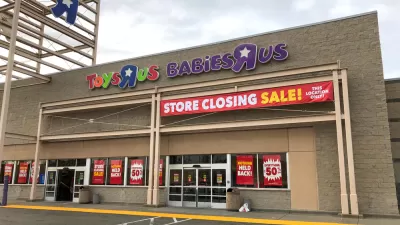
Retail Space Shrinking Again in 2018
Because of closures at big box stores like Toys R US, 2018 will see total retail space down sharply even while the number of store closures is small compared to last year.

Brick and Mortar Continue to Struggle as Shoppers Scatter
Online options and oversaturation in some markets are leading to continued declines in physical storefronts around the country.

Depopulation Patterns Get Weird
A recent ranking of “declining” cities heavily features some of the most expensive cities in the country — including New York City and a half-dozen in the San Francisco Bay Area.
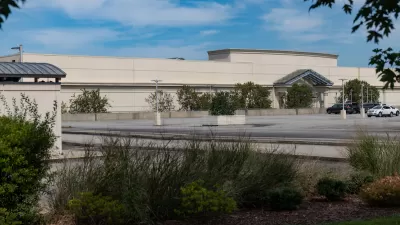
Pennsylvania Mall Conversion Bill Passes House
If passed, the bill would promote the adaptive reuse of defunct commercial buildings.
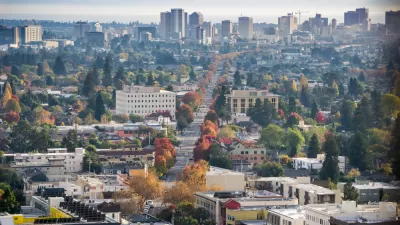
California Exodus: Population Drops Below 39 Million
Never mind the 40 million that demographers predicted the Golden State would reach by 2018. The state's population dipped below 39 million to 38.965 million last July, according to Census data released in March, the lowest since 2015.

Google Maps Introduces New Transit, EV Features
It will now be easier to find electric car charging stations and transit options.

Ohio Lawmakers Propose Incentivizing Housing Production
A proposed bill would take a carrot approach to stimulating housing production through a grant program that would reward cities that implement pro-housing policies.

Chicago Awarded $2M Reconnecting Communities Grant
Community advocates say the city’s plan may not do enough to reverse the negative impacts of a major expressway.
City of Costa Mesa
Licking County
Barrett Planning Group LLC
HUD's Office of Policy Development and Research
Mpact Transit + Community
HUD's Office of Policy Development and Research
City of Universal City TX
ULI Northwest Arkansas
Town of Zionsville

Urban Design for Planners 1: Software Tools
This six-course series explores essential urban design concepts using open source software and equips planners with the tools they need to participate fully in the urban design process.
Planning for Universal Design
Learn the tools for implementing Universal Design in planning regulations.
