


A provocative new exhibition at the New York Public Library challenges new bans on taking pictures in public space, and proposes the idea that photography is in some ways an exercise of eminent domain.


"In 2005, the Metropolitan Transportation Authority considered, then backed away from, a proposal to ban photography on subways and buses (unless a permit was obtained). In 2007, the Bloomberg administration faced a firestorm from photographers and filmmakers over a proposal to restrict video recording on streets and in other public spaces.
Stephen C. Pinson, the curator of photography at the New York Public Library, sees the debates as examples of the fine line between public and private, a line that has always been an issue in photography.
In a short book accompanying "Eminent Domain: Contemporary Photography and the City," a new exhibition at the library, Mr. Pinson writes: 'Indeed, issues of privacy and image rights have troubled photography throughout its history; with the shift to digital media and the increasing regulation of public space (both literal and virtual), these issues are becoming even more complex. A photograph, after all, is a transaction between private and public that is negotiated through the taking of an image - a kind of eminent domain of the visual realm.'"
FULL STORY: Library Looks at Photography and the City

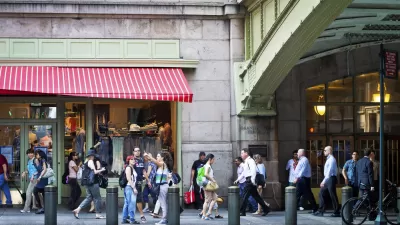
N.Y.C. Density and Spread of Coronavirus
The densest city in the country is struggling with the rapid spread of the virus, and close proximity is likely a primary factor.
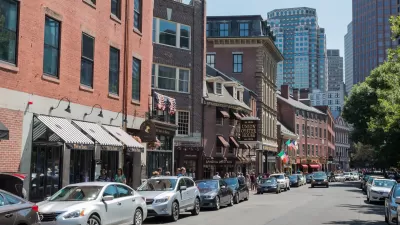
A Bold Vision for a Car-Free Boston
As other cities take daring steps to reclaim their streets, a car ban in downtown Boston doesn’t seem so implausible.

Making Privately Owned Public Spaces in New York City More Accessible by Mapping Them
A new map shows where privately owned public spaces are located to encourage more public use.
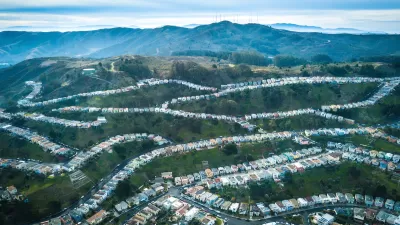
Depopulation Patterns Get Weird
A recent ranking of “declining” cities heavily features some of the most expensive cities in the country — including New York City and a half-dozen in the San Francisco Bay Area.
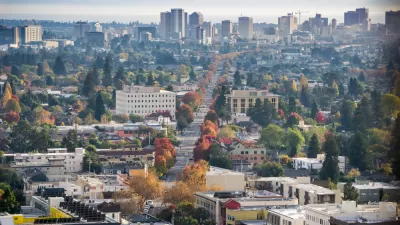
California Exodus: Population Drops Below 39 Million
Never mind the 40 million that demographers predicted the Golden State would reach by 2018. The state's population dipped below 39 million to 38.965 million last July, according to Census data released in March, the lowest since 2015.
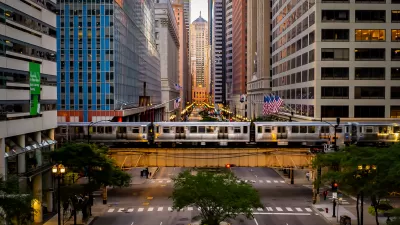
Chicago to Turn High-Rise Offices into Housing
Four commercial buildings in the Chicago Loop have been approved for redevelopment into housing in a bid to revitalize the city’s downtown post-pandemic.

New Park Opens in the Santa Clarita Valley
The City of Santa Clarita just celebrated the grand opening of its 38th park, the 10.5-acre Skyline Ranch Park.

U.S. Supreme Court: California's Impact Fees May Violate Takings Clause
A California property owner took El Dorado County to state court after paying a traffic impact fee he felt was exorbitant. He lost in trial court, appellate court, and the California Supreme Court denied review. Then the U.S. Supreme Court acted.

How Urban Form Impacts Housing Affordability
The way we design cities affects housing costs differently than you might think.
City of Costa Mesa
Licking County
Barrett Planning Group LLC
HUD's Office of Policy Development and Research
Mpact Transit + Community
HUD's Office of Policy Development and Research
City of Universal City TX
ULI Northwest Arkansas
Town of Zionsville

Urban Design for Planners 1: Software Tools
This six-course series explores essential urban design concepts using open source software and equips planners with the tools they need to participate fully in the urban design process.
Planning for Universal Design
Learn the tools for implementing Universal Design in planning regulations.
