


Mark Kingwell observes the sharp -- and deadly -- contrast between shining Shanghai skyscrapers and the poorly-built prefab concrete structures in China's rural areas that proved to be deathtraps in the recent earthquake.


"China's recent growth is sometimes called a microcosm of modern capitalism, but a more accurate metaphor is the pressure cooker. But note the strange pincer of Chinese building: It is one boom with two styles, the prefab concrete deathtrap, but also the shining signature skyscraper. In downtown Shanghai, height then becomes a measure of time as well as money: The more you rise above grade, the closer you come to entering the 21st century dream of position and power. At the pinnacle, in penthouse apartments and rotating cocktail bars of the showcase buildings, lies the dream-world of postindustrial success, the elite perch. Everyone else will have to make do with walls that pulverize from a decent shake and bricks that come apart in your hands like a child's mud pie.
This fact raises some difficult questions. Yes, it's easy - and necessary - to condemn subcode building practices and the hazards that attend to them, wherever they happen. China's record here makes a reassuring target, just as decrying its human-rights record by tackling an Olympic torch-bearer offers a surefire exercise in moral superiority. A little hypocrisy goes a long way. We like to think this would be impossible in a democratic country, where violations would have immediate costs, ideally reducing to nil the incentive for taking shortcuts on materials or practices.
In fact, building in North America and Europe routinely falls short of this ideal. Building codes are fat tomes of cross-referenced regulation and constraint, some of it philosophically confusing. Architects are required to conform to the code, of course, and most large projects include a code-compliance professional who makes sure that they do. But many smaller projects slip under this radar, and even large ones face the daily realities of budget and time. Nobody can police every rivet or wire of a building.
Hence more troubling is the question of whether great architecture is any longer possible under democratic conditions."
FULL STORY: China builds - and sometimes falls short

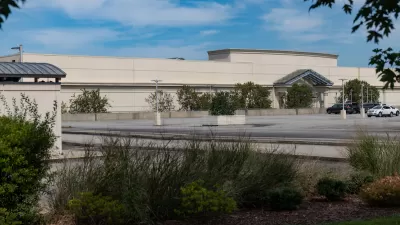
Pennsylvania Mall Conversion Bill Passes House
If passed, the bill would promote the adaptive reuse of defunct commercial buildings.
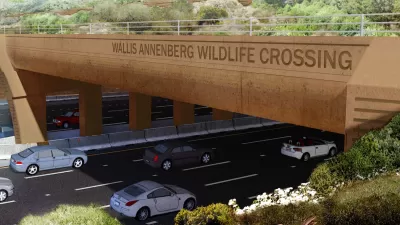
World's Largest Wildlife Overpass In the Works in Los Angeles County
Caltrans will soon close half of the 101 Freeway in order to continue construction of the Wallis Annenberg Wildlife Crossing near Agoura Hills in Los Angeles County.

U.S. Supreme Court: California's Impact Fees May Violate Takings Clause
A California property owner took El Dorado County to state court after paying a traffic impact fee he felt was exorbitant. He lost in trial court, appellate court, and the California Supreme Court denied review. Then the U.S. Supreme Court acted.

Podcast: Addressing the Root Causes of Transit Violence
Deploying transit police is a short-term fix. How can transit agencies build sustainable safety efforts?

Minneapolis as a Model for Housing Affordability
Through a combination of policies, the city has managed to limit the severity of the nationwide housing crisis.

Indy Bikeshare System Turns 10, Expands to E-Bikes
Pacers Bikeshare riders logged over 700,000 rides since the system launched in 2014.
City of Costa Mesa
Licking County
Barrett Planning Group LLC
HUD's Office of Policy Development and Research
Mpact Transit + Community
HUD's Office of Policy Development and Research
Tufts University, Department of Urban and Environmental Policy & Planning
City of Universal City TX
ULI Northwest Arkansas

Urban Design for Planners 1: Software Tools
This six-course series explores essential urban design concepts using open source software and equips planners with the tools they need to participate fully in the urban design process.
Planning for Universal Design
Learn the tools for implementing Universal Design in planning regulations.
