


Speed has become far more important than storage in moving goods. The success of your regional trade industry will depend on it. Are you planning for it?


 The Ports of Los Angeles and Long Beach experienced the largest concentration of port activity in the Americas and the third largest in the world in 1999, behind Singapore and Hong Kong.
According to the Ports of Los Angeles and Long Beach, roughly eight million twenty foot equivalent units (TEUs) of goods passed through them combined last year. That represents almost three times the activity of the second largest port in the U.S., New York/New Jersey.
Airfreight activity at LAX also surged last year. According to a report by Trade Inflo Inc., air cargo imports and exports hit $67.3 billion, nearing two million metric tons.
These huge volumes of freight are an indication of the robust global market and are great news for the local economy. However, the sheer volume creates logistical challenges for cargo and transport companies –- challenges further complicated by already clogged freeways.
In moving goods through the supply chain, speed has become far more important than storage. The explosion in expedited commerce among all parties in the supply chain places an even greater premium on speed from production to consumption. Global logistics increasingly are being tailored right down to the individual SKU.
Many freight and transport companies need real estate facilities located and designed for speed, not storage. Airfreight companies can expect new kinds of on- or near-tarmac facilities that facilitate "high throughput" distribution – low cube, narrow, column-free clearspans that are double-loaded so you can ship and receive on both sides of the building. They look to locations near freeway arteries, such as I-105 and the Century Freeway, that save them time.
Transport companies also look to the South Bay industrial market. Given its strategic proximity to the Ports of Los Angeles and Long Beach, it has become a premier industrial market with rents and property values increasing significantly over the last twelve months.
The ports of Los Angeles and Long Beach will become an increasingly important part of the flow of goods. High throughput distribution buildings that facilitate the speedy movement of goods and enable time definite deliveries will be in greater demand in the future. This will mean potential profit for thoughtful investors and a driver of economic growth for the region.
W. Blake Baird is President of AMB Property Corporation, one of the leading owners and operators of industrial real estate nationwide. AMB's properties are concentrated in major distribution markets across the country -- located near airports, ports and major freeway systems.

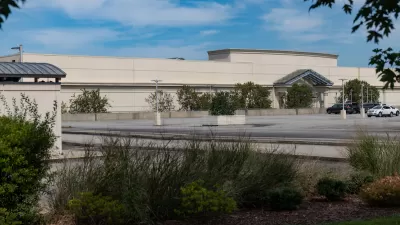
Pennsylvania Mall Conversion Bill Passes House
If passed, the bill would promote the adaptive reuse of defunct commercial buildings.

Coming Soon to Ohio: The Largest Agrivoltaic Farm in the US
The ambitious 6,000-acre project will combine an 800-watt solar farm with crop and livestock production.
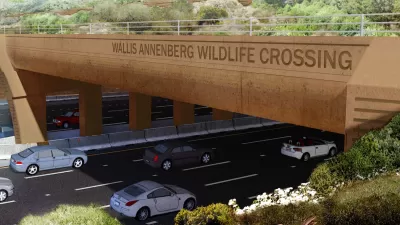
World's Largest Wildlife Overpass In the Works in Los Angeles County
Caltrans will soon close half of the 101 Freeway in order to continue construction of the Wallis Annenberg Wildlife Crossing near Agoura Hills in Los Angeles County.

California Grid Runs on 100% Renewable Energy for Over 9 Hours
The state’s energy grid was entirely powered by clean energy for some portion of the day on 37 out of the last 45 days.

New Forecasting Tool Aims to Reduce Heat-Related Deaths
Two federal agencies launched a new, easy-to-use, color-coded heat warning system that combines meteorological and medical risk factors.

AI Traffic Management Comes to Dallas-Fort Worth
Several Texas cities are using an AI-powered platform called NoTraffic to help manage traffic signals to increase safety and improve traffic flow.
City of Costa Mesa
Licking County
Barrett Planning Group LLC
HUD's Office of Policy Development and Research
Mpact Transit + Community
HUD's Office of Policy Development and Research
Tufts University, Department of Urban and Environmental Policy & Planning
City of Universal City TX
ULI Northwest Arkansas

Write for Planetizen


Urban Design for Planners 1: Software Tools
This six-course series explores essential urban design concepts using open source software and equips planners with the tools they need to participate fully in the urban design process.
Planning for Universal Design
Learn the tools for implementing Universal Design in planning regulations.
