


The Guardian has released a list of the "50 people who could save the planet," including some urban innovators who are changing the way the world thinks about cities.


"But who are the people who can bring about change, the pioneers coming up with radical solutions? We can modify our lifestyles, but that will never be enough. Who are the politicians most able to force society and industry to do things differently? Where are the green shoots that will get us out of the global ecological mess?"
-Ken Livingstone
London mayor
"Ken Livingstone, 62, has dragged the capital to the top of the major world cities' environment league. He shocked the more timid Tony Blair and Gordon Brown when he set an ambitious 60% CO2 reduction target by 2025 - and now he is championing renewables, energy from waste, heat and power systems, and ways Londoners can adapt their homes. The capital has seen a huge increase in cycling, and from this month most of the city's public buildings will be 'retrofitted' to save energy. It's beginning to work, he says: four years ago, more than one in three Londoners used their cars every day; now fewer than one in five do."
-Peter Head
Civil engineer
"Peter Head, 60, is an unlikely man to be leading a cultural revolution. The soft-spoken Englishman, a director of Arup and one of the world's leading bridge builders, is now the master planner of the world's first true eco city.
His brief from the Shanghai city authorities may have been simple, but in building and design terms it was the equivalent of a moonshot: to build on an island at the mouth of the Yangtze a city for 500,000 people that can lead the world's fastest growing economy out of the industrial age into the ecological one. Dongtan will cost $50bn or more, and be a prototype for 400 or more similar Chinese cities over the next 30 years."
-Jockin Arputham
Urban activist
"Jockin Arputham, 60, has lived in a slum outside Mumbai since 1963. As president of the National Slum Dwellers Association and Slum Dwellers International, he is rallying the world's poorest city dwellers to improve their environment. Urban squalor is one of the biggest problems of the age, and by 2030 the number of slum dwellers is projected to reach two billion - a recipe for poverty, disease and political instability. Arputham has pioneered a way to help the poor negotiate with city authorities to secure land ownership - the greatest barrier to improving slums."
FULL STORY: 50 people who could save the planet

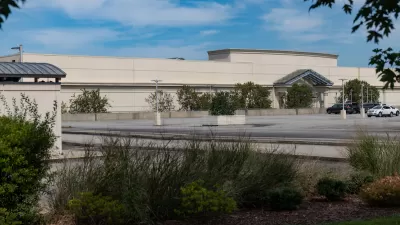
Pennsylvania Mall Conversion Bill Passes House
If passed, the bill would promote the adaptive reuse of defunct commercial buildings.
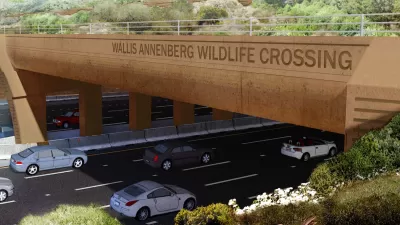
World's Largest Wildlife Overpass In the Works in Los Angeles County
Caltrans will soon close half of the 101 Freeway in order to continue construction of the Wallis Annenberg Wildlife Crossing near Agoura Hills in Los Angeles County.

U.S. Supreme Court: California's Impact Fees May Violate Takings Clause
A California property owner took El Dorado County to state court after paying a traffic impact fee he felt was exorbitant. He lost in trial court, appellate court, and the California Supreme Court denied review. Then the U.S. Supreme Court acted.

New Forecasting Tool Aims to Reduce Heat-Related Deaths
Two federal agencies launched a new, easy-to-use, color-coded heat warning system that combines meteorological and medical risk factors.

AI Traffic Management Comes to Dallas-Fort Worth
Several Texas cities are using an AI-powered platform called NoTraffic to help manage traffic signals to increase safety and improve traffic flow.

Podcast: Addressing the Root Causes of Transit Violence
Deploying transit police is a short-term fix. How can transit agencies build sustainable safety efforts?
City of Costa Mesa
Licking County
Barrett Planning Group LLC
HUD's Office of Policy Development and Research
Mpact Transit + Community
HUD's Office of Policy Development and Research
Tufts University, Department of Urban and Environmental Policy & Planning
City of Universal City TX
ULI Northwest Arkansas

Urban Design for Planners 1: Software Tools
This six-course series explores essential urban design concepts using open source software and equips planners with the tools they need to participate fully in the urban design process.
Planning for Universal Design
Learn the tools for implementing Universal Design in planning regulations.
