


The higher the concentration of fast food restaurants in a city, the fatter its residents, according to a recent study from the University of Alberta.


"If you live in a city with more places to buy double-doubles, Big Macs and Mama Burgers, you're more likely to get really fat, new research from the University of Alberta confirms."
"For every extra fast-food restaurant per 10,000 people, a city's obesity rate goes up three per cent, said Sean Cash."
"Cash is a health economics professor who drew up an "obesity map" that plots obesity rates and the density of the top 10 fast-food chains in Canada."
"According to last year's Canadian Community Health Survey, Maritime residents were generally fatter and had more fast-food joints. St. John's, N.L., for instance, has an obesity rate of 36 per cent and 3.5 fast-food joints per 10,000 people. Saint John, N.B., ranked close with 35 per cent obesity and access to four outlets per 10,000 people."
FULL STORY: The greasier the city, the fatter its residents

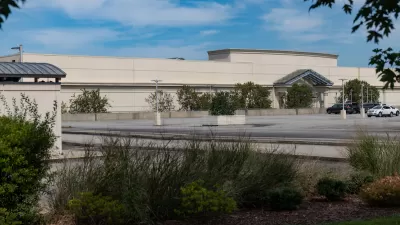
Pennsylvania Mall Conversion Bill Passes House
If passed, the bill would promote the adaptive reuse of defunct commercial buildings.
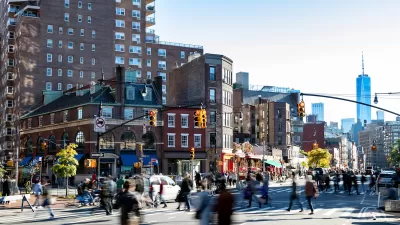
Planning for Accessibility: Proximity is More Important than Mobility
Accessibility-based planning minimizes the distance that people must travel to reach desired services and activities. Measured this way, increased density can provide more total benefits than increased speeds.
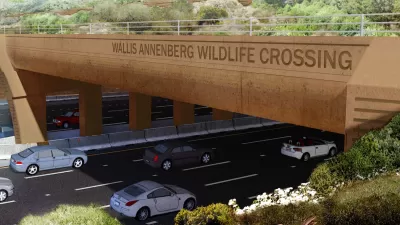
World's Largest Wildlife Overpass In the Works in Los Angeles County
Caltrans will soon close half of the 101 Freeway in order to continue construction of the Wallis Annenberg Wildlife Crossing near Agoura Hills in Los Angeles County.

Maine Approves Rent Relief Program
Legislators hope the assistance program will help struggling low-income households avoid eviction.

How Transit Architecture Impacts Real and Perceived Safety
More than a third of Americans believe major transit systems are too unsafe to ride. The built environment can change that.

New York Passes Housing Package Focused on New Development and Adaptive Reuse
The FY 2025 budget includes a new tax incentive, funding for affordable housing on state land, and support for adaptive reuse and ADUs.
City of Costa Mesa
Licking County
Barrett Planning Group LLC
HUD's Office of Policy Development and Research
Mpact Transit + Community
HUD's Office of Policy Development and Research
Tufts University, Department of Urban and Environmental Policy & Planning
City of Universal City TX
ULI Northwest Arkansas

Urban Design for Planners 1: Software Tools
This six-course series explores essential urban design concepts using open source software and equips planners with the tools they need to participate fully in the urban design process.
Planning for Universal Design
Learn the tools for implementing Universal Design in planning regulations.
