


With nearly $10 billion in bonds going up for a vote in 2008 to fund high speed rail in California, residents should consider the history of public works projects that have greatly exceeded their initial low cost estimates, writes Adam B. Summers.


"In November 2008, voters will be asked to consider a $9.95 billion bond to pay for a 700-mile high-speed rail system that would run from San Diego to Sacramento and the San Francisco Bay Area. But wait. The bonds would cover only about one-quarter of the estimated $40 billion total cost. Officials have yet to identify where the other $30 billion will come from."
"If the high-speed rail system is anything like other major infrastructure projects, we can expect actual costs to be two or three times the estimated costs and ridership to be half that of the projections. Boston's "Big Dig" project and Los Angeles County's Blue Line light rail from downtown L.A. to Long Beach both ended up costing three times more than promised. Will taxpayers be fooled again with low cost estimates and inflated promised benefits?"
"A high-speed rail system might be a cool thing to have, but is it really wise? The state's fiscal condition is steadily deteriorating. According to State Treasurer Bill Lockyer, California currently has more than $135 billion of general debt authorized, including over $42 billion in bonds approved by voters just last year. Now we are being asked for $10 billion more, which is merely a down payment on the tens of billions the high-speed train system will actually cost."
FULL STORY: California's High-Speed Train Project Should Be Derailed

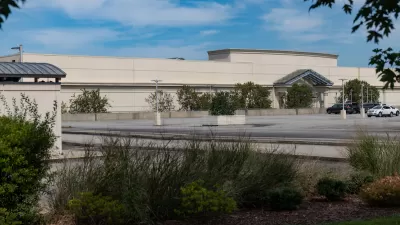
Pennsylvania Mall Conversion Bill Passes House
If passed, the bill would promote the adaptive reuse of defunct commercial buildings.
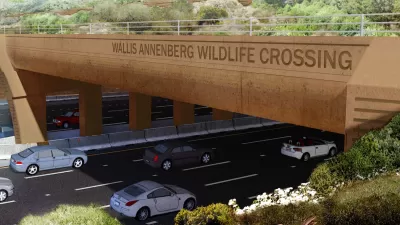
World's Largest Wildlife Overpass In the Works in Los Angeles County
Caltrans will soon close half of the 101 Freeway in order to continue construction of the Wallis Annenberg Wildlife Crossing near Agoura Hills in Los Angeles County.

U.S. Supreme Court: California's Impact Fees May Violate Takings Clause
A California property owner took El Dorado County to state court after paying a traffic impact fee he felt was exorbitant. He lost in trial court, appellate court, and the California Supreme Court denied review. Then the U.S. Supreme Court acted.

California Grid Runs on 100% Renewable Energy for Over 9 Hours
The state’s energy grid was entirely powered by clean energy for some portion of the day on 37 out of the last 45 days.

New Forecasting Tool Aims to Reduce Heat-Related Deaths
Two federal agencies launched a new, easy-to-use, color-coded heat warning system that combines meteorological and medical risk factors.

AI Traffic Management Comes to Dallas-Fort Worth
Several Texas cities are using an AI-powered platform called NoTraffic to help manage traffic signals to increase safety and improve traffic flow.
City of Costa Mesa
Licking County
Barrett Planning Group LLC
HUD's Office of Policy Development and Research
Mpact Transit + Community
HUD's Office of Policy Development and Research
Tufts University, Department of Urban and Environmental Policy & Planning
City of Universal City TX
ULI Northwest Arkansas

Urban Design for Planners 1: Software Tools
This six-course series explores essential urban design concepts using open source software and equips planners with the tools they need to participate fully in the urban design process.
Planning for Universal Design
Learn the tools for implementing Universal Design in planning regulations.
