


An urban renaissance is underway in many American cities, one fueled by the "common sense" of focusing on fundamentals. Canadian cities are looking south to pick up some good ideas.


"Last April, Washington's oldest continuously operating market burned down, a victim of faulty wiring. The neighbourhood was in shock: The Eastern Market is the very heart of Capitol Hill. But Adrian Fenty, Washington's young new mayor, vowed to have the building restored and reopened in two years or less, and in the meantime city hall used surplus revenues to construct a temporary shelter. The locals raised an astonishing $385,000 in a few weeks to help out the vendors. The market was up and running in its temporary new building by the end of August.
The rescue of the Eastern Market epitomizes the transformation of the District of Columbia. Capitol Hill, which had descended from gentility to crime-infested poverty, is once again thriving. The same is true of Logan Circle, Columbia Heights, the U Street Corridor.
Washington is not alone. Portland's Pearl District, Manhattan's Hudson Heights - where crime has declined by 84 per cent since 1993 - Chicago's South Loop, San Diego's Marina District, Boston's South End, all reflect the renaissance of urban America. Not everywhere, and not all for the same reasons. But the stereotype of the run-down, boarded-up, dangerous downtown is increasingly a myth. America's cities are back.
What happened? Demographics, unintended consequences, the arrival of common sense. City halls across the country were absorbing the same lesson: Focus on the fundamentals. Clean up the parks, scrape off the graffiti, put a cop on every corner, lower taxes, cut the red tape and let market forces do the rest.
Today, most Washington neighbourhoods are safe and clean, and enjoy twice-weekly garbage pickup. How many Canadian neighbourhoods can make the same claim?"
FULL STORY: U.S. cities are back: Take a stroll in downtown Washington

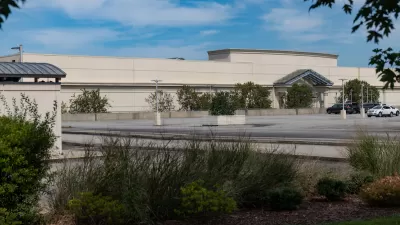
Pennsylvania Mall Conversion Bill Passes House
If passed, the bill would promote the adaptive reuse of defunct commercial buildings.
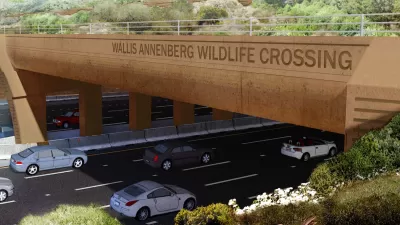
World's Largest Wildlife Overpass In the Works in Los Angeles County
Caltrans will soon close half of the 101 Freeway in order to continue construction of the Wallis Annenberg Wildlife Crossing near Agoura Hills in Los Angeles County.

U.S. Supreme Court: California's Impact Fees May Violate Takings Clause
A California property owner took El Dorado County to state court after paying a traffic impact fee he felt was exorbitant. He lost in trial court, appellate court, and the California Supreme Court denied review. Then the U.S. Supreme Court acted.

California Grid Runs on 100% Renewable Energy for Over 9 Hours
The state’s energy grid was entirely powered by clean energy for some portion of the day on 37 out of the last 45 days.

New Forecasting Tool Aims to Reduce Heat-Related Deaths
Two federal agencies launched a new, easy-to-use, color-coded heat warning system that combines meteorological and medical risk factors.

AI Traffic Management Comes to Dallas-Fort Worth
Several Texas cities are using an AI-powered platform called NoTraffic to help manage traffic signals to increase safety and improve traffic flow.
City of Costa Mesa
Licking County
Barrett Planning Group LLC
HUD's Office of Policy Development and Research
Mpact Transit + Community
HUD's Office of Policy Development and Research
Tufts University, Department of Urban and Environmental Policy & Planning
City of Universal City TX
ULI Northwest Arkansas

Urban Design for Planners 1: Software Tools
This six-course series explores essential urban design concepts using open source software and equips planners with the tools they need to participate fully in the urban design process.
Planning for Universal Design
Learn the tools for implementing Universal Design in planning regulations.
