


The booming production and use of cement is the single largest material contributor to climate change.


"In booming economies from Asia to Eastern Europe, cement is the glue of progress. The material that binds the ingredients of concrete together, cement is essential for constructing buildings and laying roads in much of the world."
"Some 80 percent of cement is made in and used by emerging economies; China alone makes and uses 45 percent of global output. Production is doubling every four years in places like Ukraine."
"But making cement creates pollution, in the form of carbon dioxide emissions, and the greenest of technologies can reduce that by only 20 percent."
"Cement plants already account for 5 percent of global emissions of carbon dioxide, the main cause of global warming."
"Compounding the problem, cement has no viable recycling potential, as the abandoned buildings that line roads from Tunisia to Mongolia demonstrate. Each new road, each new building, needs new cement."
"Worse yet, green incentives may be allowing the industry to pollute even more. The European Union subsidizes Western companies that buy outmoded cement plants in poor countries and refit them with green technology."
"The emissions per ton of cement produced do go down. But the amount of cement produced often goes way up, as does the pollution generated."
FULL STORY: In booming economies, cement is crucial for growth but an enemy of green

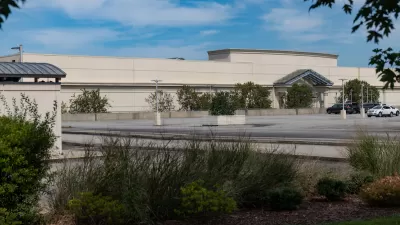
Pennsylvania Mall Conversion Bill Passes House
If passed, the bill would promote the adaptive reuse of defunct commercial buildings.

Coming Soon to Ohio: The Largest Agrivoltaic Farm in the US
The ambitious 6,000-acre project will combine an 800-watt solar farm with crop and livestock production.

World's Largest Wildlife Overpass In the Works in Los Angeles County
Caltrans will soon close half of the 101 Freeway in order to continue construction of the Wallis Annenberg Wildlife Crossing near Agoura Hills in Los Angeles County.

California Grid Runs on 100% Renewable Energy for Over 9 Hours
The state’s energy grid was entirely powered by clean energy for some portion of the day on 37 out of the last 45 days.

New Forecasting Tool Aims to Reduce Heat-Related Deaths
Two federal agencies launched a new, easy-to-use, color-coded heat warning system that combines meteorological and medical risk factors.

AI Traffic Management Comes to Dallas-Fort Worth
Several Texas cities are using an AI-powered platform called NoTraffic to help manage traffic signals to increase safety and improve traffic flow.
City of Costa Mesa
Licking County
Barrett Planning Group LLC
HUD's Office of Policy Development and Research
Mpact Transit + Community
HUD's Office of Policy Development and Research
Tufts University, Department of Urban and Environmental Policy & Planning
City of Universal City TX
ULI Northwest Arkansas

Urban Design for Planners 1: Software Tools
This six-course series explores essential urban design concepts using open source software and equips planners with the tools they need to participate fully in the urban design process.
Planning for Universal Design
Learn the tools for implementing Universal Design in planning regulations.
