


Planners of the 2010 Winter Olympics are discussing ways to encourage Vancouverites to ditch their cars during the games.


"Vancouver residents may be pressed to leave their cars at home for the two weeks of the 2010 Winter Olympics, says the chief executive officer of the organizing committee.
John Furlong, who seemed bullish about Vancouverites buying into the idea, said yesterday the push for limited car use will be further refined as organizers begin to focus on transportation planning for the 21st Winter Games.
"Is it possible that we would ask people to work with us and leave their cars at home and go to [public transit]? Yes it is," Mr. Furlong told reporters, after a wide-ranging speech to the Vancouver Board of Trade in which he touched frequently on what the public will be able to do to participate in the event. "It's possible we could ask them."
He also said organizers may approach businesses in Canada's third-largest city - already traffic-challenged by the lack of major roads in its confining geography of mountains and water - to rework their hours of operation to ease transportation issues.
Much of the transportation discussion has focused on moving people between Vancouver and Whistler, including issues related to a $600-million upgrade to the Sea to Sky Highway linking the two communities central to the Games.
However, Mr. Furlong's comments focused more on how things might work within the already-congested core of the city."
FULL STORY: Drivers may be asked to yield for Games

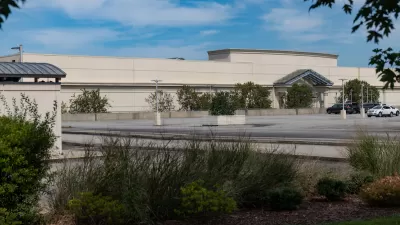
Pennsylvania Mall Conversion Bill Passes House
If passed, the bill would promote the adaptive reuse of defunct commercial buildings.
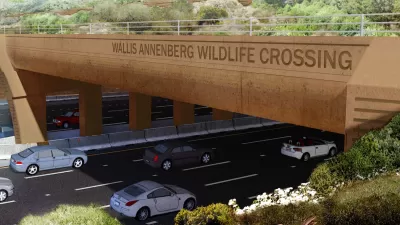
World's Largest Wildlife Overpass In the Works in Los Angeles County
Caltrans will soon close half of the 101 Freeway in order to continue construction of the Wallis Annenberg Wildlife Crossing near Agoura Hills in Los Angeles County.

U.S. Supreme Court: California's Impact Fees May Violate Takings Clause
A California property owner took El Dorado County to state court after paying a traffic impact fee he felt was exorbitant. He lost in trial court, appellate court, and the California Supreme Court denied review. Then the U.S. Supreme Court acted.

California Grid Runs on 100% Renewable Energy for Over 9 Hours
The state’s energy grid was entirely powered by clean energy for some portion of the day on 37 out of the last 45 days.

New Forecasting Tool Aims to Reduce Heat-Related Deaths
Two federal agencies launched a new, easy-to-use, color-coded heat warning system that combines meteorological and medical risk factors.

AI Traffic Management Comes to Dallas-Fort Worth
Several Texas cities are using an AI-powered platform called NoTraffic to help manage traffic signals to increase safety and improve traffic flow.
City of Costa Mesa
Licking County
Barrett Planning Group LLC
HUD's Office of Policy Development and Research
Mpact Transit + Community
HUD's Office of Policy Development and Research
Tufts University, Department of Urban and Environmental Policy & Planning
City of Universal City TX
ULI Northwest Arkansas

Urban Design for Planners 1: Software Tools
This six-course series explores essential urban design concepts using open source software and equips planners with the tools they need to participate fully in the urban design process.
Planning for Universal Design
Learn the tools for implementing Universal Design in planning regulations.
