


Proponents of the "creative class" theory argue that hip cities will be the most successful because they lure highly educated professionals who are essential in today's economy. But detractors say this is simply an argument for bread and circuses.


"A few years ago, a little-known academic named Richard Florida turned the economic development world upside down by publishing a book called The Rise of the Creative Class. In a nutshell, Florida's argument was that to be successful today, cities have to be cool. The engine of the American economy, he claimed, was creativity."
Florida is correct to a point, writes William Fulton, the publisher of California Planning & Development Report and economic development columnist for Governing magazine. But there is no economic development panacea, Fulton notes. Moreover, Florida's approach has gotten boiled down by both detractors and ill-informed supporters as little more than tourism and entertainment.
What's most unfortunate, Fulton writes, is that the discussion as devolved into a them-versus-us debate that is not useful to anyone truly interested in economic development.
Thanks to Paul Shigley
FULL STORY: California Planning & Development Report


Coming Soon to Ohio: The Largest Agrivoltaic Farm in the US
The ambitious 6,000-acre project will combine an 800-watt solar farm with crop and livestock production.
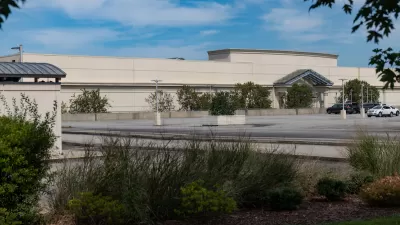
Pennsylvania Mall Conversion Bill Passes House
If passed, the bill would promote the adaptive reuse of defunct commercial buildings.

U.S. Supreme Court: California's Impact Fees May Violate Takings Clause
A California property owner took El Dorado County to state court after paying a traffic impact fee he felt was exorbitant. He lost in trial court, appellate court, and the California Supreme Court denied review. Then the U.S. Supreme Court acted.

Dallas Surburb Bans New Airbnbs
Plano’s city council banned all new permits for short-term rentals as concerns about their impacts on housing costs grow.

Divvy Introduces E-Bike Charging Docks
New, circular docks let e-bikes charge at stations, eliminating the need for frequent battery swaps.

How Freeway Projects Impact Climate Resilience
In addition to displacement and public health impacts, highway expansions can also make communities less resilient to flooding and other climate-related disasters.
City of Costa Mesa
Licking County
Barrett Planning Group LLC
HUD's Office of Policy Development and Research
Mpact Transit + Community
HUD's Office of Policy Development and Research
Tufts University, Department of Urban and Environmental Policy & Planning
City of Universal City TX
ULI Northwest Arkansas

Urban Design for Planners 1: Software Tools
This six-course series explores essential urban design concepts using open source software and equips planners with the tools they need to participate fully in the urban design process.
Planning for Universal Design
Learn the tools for implementing Universal Design in planning regulations.
