


Mumbai is on the verge of becoming the second-biggest city in the world. But to get there, redevelopment will require the displacement of thousands, if not millions.


"Mumbai is South Asia's biggest city. By 2015 the UN says it will be the world's second-biggest after Tokyo, with nearly 25m people. Yet already it is choking. Around half the population-of 14m, at a modest estimate-live in slums. Another 3m commute daily from surrounding suburbs. Most come by rail, though the service would be inadequate even if it were not hobbled by a shortage of trains and a surfeit of vagrants. At peak hours, 5,000 commuters cling to trains designed for 1,700. Hundreds die on the tracks each year."
"Mumbaikars have long seen the trouble ahead. In recent years, the state and central governments have recognised it too. There is much at stake, for India as well as Mumbai. Its recent high economic growth is an urban phenomenon. Indeed, the failure of rural India is why so many Indians come to town. Huge improvements in urban infrastructure are needed urgently."
"But there is a problem. To redevelop Mumbai and its hinterland involves moving people. And since in India third-world conditions are dignified (at least in theory) with first-world rights, this causes blockages."
FULL STORY: Maximum city blues

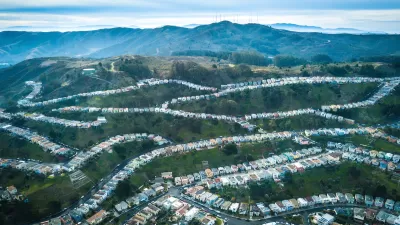
Depopulation Patterns Get Weird
A recent ranking of “declining” cities heavily features some of the most expensive cities in the country — including New York City and a half-dozen in the San Francisco Bay Area.
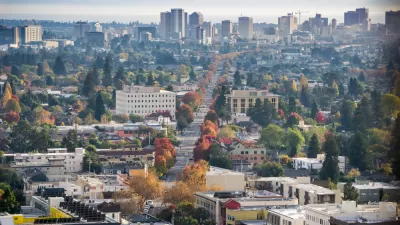
California Exodus: Population Drops Below 39 Million
Never mind the 40 million that demographers predicted the Golden State would reach by 2018. The state's population dipped below 39 million to 38.965 million last July, according to Census data released in March, the lowest since 2015.
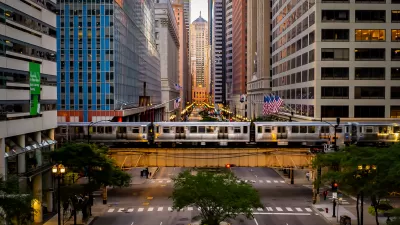
Chicago to Turn High-Rise Offices into Housing
Four commercial buildings in the Chicago Loop have been approved for redevelopment into housing in a bid to revitalize the city’s downtown post-pandemic.

New Park Opens in the Santa Clarita Valley
The City of Santa Clarita just celebrated the grand opening of its 38th park, the 10.5-acre Skyline Ranch Park.

U.S. Supreme Court: California's Impact Fees May Violate Takings Clause
A California property owner took El Dorado County to state court after paying a traffic impact fee he felt was exorbitant. He lost in trial court, appellate court, and the California Supreme Court denied review. Then the U.S. Supreme Court acted.

How Urban Form Impacts Housing Affordability
The way we design cities affects housing costs differently than you might think.
City of Costa Mesa
Licking County
Barrett Planning Group LLC
HUD's Office of Policy Development and Research
Mpact Transit + Community
HUD's Office of Policy Development and Research
City of Universal City TX
ULI Northwest Arkansas
Town of Zionsville

Urban Design for Planners 1: Software Tools
This six-course series explores essential urban design concepts using open source software and equips planners with the tools they need to participate fully in the urban design process.
Planning for Universal Design
Learn the tools for implementing Universal Design in planning regulations.
