


The city of Toronto originally had more park space than New York's Central Park. But the need to generate revenue caused the city to sell off much of its parkspace over the years, leaving a city with comparably few open spaces.


"If you added it all up, in the early 1800s, Toronto had more foliage than New York's Central Park. But today, the GTA's most usable parks – Sunnybrook, Agincourt and Bluffer's to name a few – are only accessible by car or the TTC."
"Who in their right mind would plan a city without parks? No one. It was never supposed to be this way."
"'We had a cholera epidemic (around) 1830 and we needed to build a bigger hospital. But to pay for it, we had to sell off the land,' said Myers, who is the founder of Friends of Fort York and the Citizens for Old Town."
"Then in the 1850s, the Grand Trunk Railway arrived. City council soon realized it had this huge asset in the waterfront Walks and Gardens. The decision was made to sell off parts of the land and put the money into a trust to better improve city parks, Myers said."
"It wasn't until the mid-1950s that the city of Toronto put parks development on its priority list."
"Around the same time, in other parts of the GTA, city officials were working to make sure they didn't fall into the same trap."
FULL STORY: What happened to city's park plan?

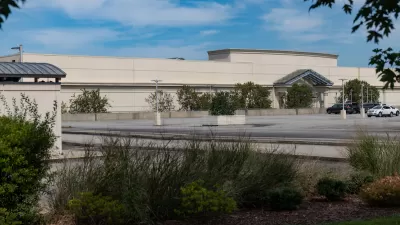
Pennsylvania Mall Conversion Bill Passes House
If passed, the bill would promote the adaptive reuse of defunct commercial buildings.
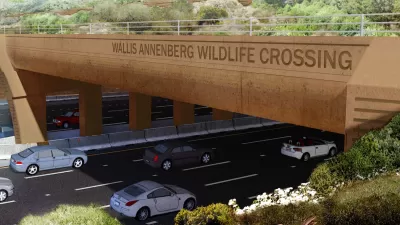
World's Largest Wildlife Overpass In the Works in Los Angeles County
Caltrans will soon close half of the 101 Freeway in order to continue construction of the Wallis Annenberg Wildlife Crossing near Agoura Hills in Los Angeles County.

U.S. Supreme Court: California's Impact Fees May Violate Takings Clause
A California property owner took El Dorado County to state court after paying a traffic impact fee he felt was exorbitant. He lost in trial court, appellate court, and the California Supreme Court denied review. Then the U.S. Supreme Court acted.

Coming Soon to Ohio: The Largest Agrivoltaic Farm in the US
The ambitious 6,000-acre project will combine an 800-watt solar farm with crop and livestock production.

New York’s Deadliest Neighborhoods for Pedestrians
Pedestrian deaths rose last year, but remain below pre-2020 levels.

Eviction Looms for Low-Income Tenants as Rent Debt Rises
Nonprofit housing operators across the country face almost $10 billion in rent debt.
City of Costa Mesa
Licking County
Barrett Planning Group LLC
HUD's Office of Policy Development and Research
Mpact Transit + Community
HUD's Office of Policy Development and Research
Tufts University, Department of Urban and Environmental Policy & Planning
City of Universal City TX
ULI Northwest Arkansas

Urban Design for Planners 1: Software Tools
This six-course series explores essential urban design concepts using open source software and equips planners with the tools they need to participate fully in the urban design process.
Planning for Universal Design
Learn the tools for implementing Universal Design in planning regulations.
