


An enormous fire in Edmonton that destroyed a condo development under construction and damaged more than 70 nearby duplexes has resulted in calls to upgrade Canada's building codes.


"Canada needs far tougher building codes, Edmonton's fire department chief said Sunday after a fire torched a large condominium under construction and nine other homes in Edmonton over the weekend, causing an estimated $25-million in damage.
'There needs to be a whole change in philosophy for building codes,' Chief Randy Wolsey said in an interview, explaining that flammable material, such as vinyl siding, helps fires to spread quickly.
Mr. Wolsey called for immediate, interim changes to the country's building codes, particularly in Alberta, where a massive building boom is creating suburb after suburb of homes that he says are less safe than they appear.
The giant fire in south Edmonton began Saturday just after 5 a.m., first sparked by a yet unknown cause in a 149-unit wood frame condominium that was unfinished and unoccupied. The brutal blaze quickly jumped to neighbouring residences, razing nine duplexes and leaving 18 families homeless. It also caused severe damage to 38 other duplexes, and exterior damage – such as melted vinyl siding – to an additional 30 duplexes.
The nature of residential fires has changed dramatically in the past decade, but building codes in Canada, originating in the years after the Second World War, are unable to deal with the current reality, Mr. Wolsey said.
Building codes have been designed to quell 'inside out' fires – blazes that engulf a home's interior before spreading through the walls, and potentially to other residences.
However, because of technological advances, such as lighter, cheaper and more durable building materials, devastating fires now are often 'outside in' fires, as was the case in Edmonton. Such fires devour vinyl siding, which melts quickly and conducts the flames further, so they then tear through tar paper and the cheap material made of wood strands and glue found beneath. These materials burn hot, propagating the fire.
Compounding the problem is the fact that many new homes in identical suburbs across Canada are built extremely close together, allowing flames to hop from house to house like a killer disease."
FULL STORY: $25-million fire calls building codes into question

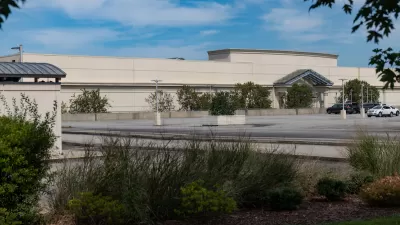
Pennsylvania Mall Conversion Bill Passes House
If passed, the bill would promote the adaptive reuse of defunct commercial buildings.

Planning for Accessibility: Proximity is More Important than Mobility
Accessibility-based planning minimizes the distance that people must travel to reach desired services and activities. Measured this way, increased density can provide more total benefits than increased speeds.
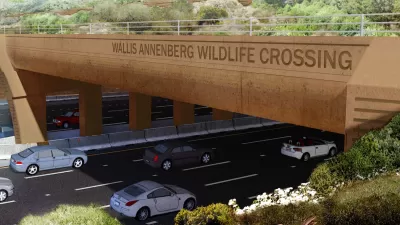
World's Largest Wildlife Overpass In the Works in Los Angeles County
Caltrans will soon close half of the 101 Freeway in order to continue construction of the Wallis Annenberg Wildlife Crossing near Agoura Hills in Los Angeles County.

Maine Approves Rent Relief Program
Legislators hope the assistance program will help struggling low-income households avoid eviction.

How Transit Architecture Impacts Real and Perceived Safety
More than a third of Americans believe major transit systems are too unsafe to ride. The built environment can change that.

New York Passes Housing Package Focused on New Development and Adaptive Reuse
The FY 2025 budget includes a new tax incentive, funding for affordable housing on state land, and support for adaptive reuse and ADUs.
City of Costa Mesa
Licking County
Barrett Planning Group LLC
HUD's Office of Policy Development and Research
Mpact Transit + Community
HUD's Office of Policy Development and Research
Tufts University, Department of Urban and Environmental Policy & Planning
City of Universal City TX
ULI Northwest Arkansas

Urban Design for Planners 1: Software Tools
This six-course series explores essential urban design concepts using open source software and equips planners with the tools they need to participate fully in the urban design process.
Planning for Universal Design
Learn the tools for implementing Universal Design in planning regulations.
