


An investigation reveals that transit use remains low for residents of several Los Angeles-area transit-oriented housing developments.


"In Los Angeles alone, billions of public and private dollars have been lavished on transit-oriented projects such as Hollywood & Vine, with more than 20,000 residential units approved within a quarter mile of transit stations between 2001 and 2005."
"But there is little research to back up the rosy predictions. Among the few academic studies of the subject, one that looked at buildings in the Los Angeles area showed that transit-based development successfully weaned relatively few residents from their cars. It also found that, over time, no more people in the buildings studied were taking transit 10 years after a project opened than when it was first built."
"The Times decided to examine driving habits at four apartment and condominium complexes that have already been built at or near transit stations in South Pasadena, North Hollywood, Pasadena and Hollywood."
"The reporting showed that only a small fraction of residents shunned their cars during morning rush hour. Most people said that even though they lived close to transit stations, the trains weren't convenient enough, taking too long to arrive at destinations and lacking stops near their workplaces. Many complained that they didn't feel comfortable riding the MTA's crowded, often slow-moving buses from transit terminals to their jobs."
FULL STORY: Near the rails but still on the road

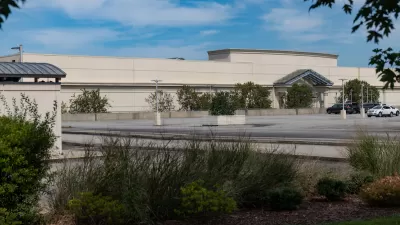
Pennsylvania Mall Conversion Bill Passes House
If passed, the bill would promote the adaptive reuse of defunct commercial buildings.

Coming Soon to Ohio: The Largest Agrivoltaic Farm in the US
The ambitious 6,000-acre project will combine an 800-watt solar farm with crop and livestock production.
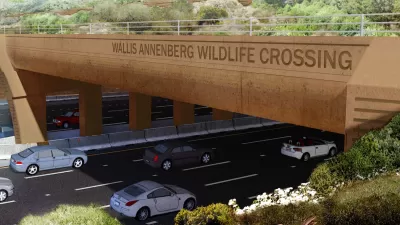
World's Largest Wildlife Overpass In the Works in Los Angeles County
Caltrans will soon close half of the 101 Freeway in order to continue construction of the Wallis Annenberg Wildlife Crossing near Agoura Hills in Los Angeles County.

California Grid Runs on 100% Renewable Energy for Over 9 Hours
The state’s energy grid was entirely powered by clean energy for some portion of the day on 37 out of the last 45 days.

New Forecasting Tool Aims to Reduce Heat-Related Deaths
Two federal agencies launched a new, easy-to-use, color-coded heat warning system that combines meteorological and medical risk factors.

AI Traffic Management Comes to Dallas-Fort Worth
Several Texas cities are using an AI-powered platform called NoTraffic to help manage traffic signals to increase safety and improve traffic flow.
City of Costa Mesa
Licking County
Barrett Planning Group LLC
HUD's Office of Policy Development and Research
Mpact Transit + Community
HUD's Office of Policy Development and Research
Tufts University, Department of Urban and Environmental Policy & Planning
City of Universal City TX
ULI Northwest Arkansas

Urban Design for Planners 1: Software Tools
This six-course series explores essential urban design concepts using open source software and equips planners with the tools they need to participate fully in the urban design process.
Planning for Universal Design
Learn the tools for implementing Universal Design in planning regulations.
