


Subprime lenders appears to have deliberately targeted some of America's poorest communities. The resulting wave of foreclosures could eliminate more homeowners than were added.


"Much of the focus in the subprime debacle has been on the demise of bubble markets in balmy locales such as California and Florida. But the subprime market has also channeled a surprising amount of money into some of America's poorer and more-troubled local economies.
In 2006 alone, subprime investors from all over the world injected more than a billion dollars into 22 ZIP Codes in Detroit, where home values were falling, unemployment was rising and the foreclosure rate was already the nation's highest,..The figures show the extent to which the new world of mortgage finance has made the American dream of homeownership accessible to folks in previously underserved communities. By some estimates, subprime lending has accounted for as much as half of the past decade's rise in the U.S. homeownership rate to 69% from 65%. But...the flood of cash has also encouraged people to get into financially precarious positions, often precisely at the time when they were least able to afford it. In doing so, it may have temporarily alleviated -- but ultimately worsened -- some of the nation's most acute economic problems.
If events unfold as some predict, subprime lending could end up eliminating more homeowners than it created. One study by the Center for Responsible Lending, a nonprofit that focuses on abusive lending practices, forecasts that the subprime boom will result in a total of 2.4 million foreclosures nationwide, most of them on homes people owned before taking out the loans. That outweighs even the most optimistic estimates of the number of homeowners created, which don't exceed two million."
FULL STORY: DAY OF RECKONING: 'Subprime' Aftermath

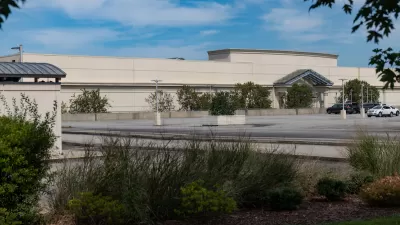
Pennsylvania Mall Conversion Bill Passes House
If passed, the bill would promote the adaptive reuse of defunct commercial buildings.
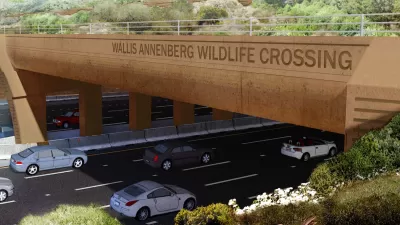
World's Largest Wildlife Overpass In the Works in Los Angeles County
Caltrans will soon close half of the 101 Freeway in order to continue construction of the Wallis Annenberg Wildlife Crossing near Agoura Hills in Los Angeles County.

U.S. Supreme Court: California's Impact Fees May Violate Takings Clause
A California property owner took El Dorado County to state court after paying a traffic impact fee he felt was exorbitant. He lost in trial court, appellate court, and the California Supreme Court denied review. Then the U.S. Supreme Court acted.

California Grid Runs on 100% Renewable Energy for Over 9 Hours
The state’s energy grid was entirely powered by clean energy for some portion of the day on 37 out of the last 45 days.

New Forecasting Tool Aims to Reduce Heat-Related Deaths
Two federal agencies launched a new, easy-to-use, color-coded heat warning system that combines meteorological and medical risk factors.

AI Traffic Management Comes to Dallas-Fort Worth
Several Texas cities are using an AI-powered platform called NoTraffic to help manage traffic signals to increase safety and improve traffic flow.
City of Costa Mesa
Licking County
Barrett Planning Group LLC
HUD's Office of Policy Development and Research
Mpact Transit + Community
HUD's Office of Policy Development and Research
Tufts University, Department of Urban and Environmental Policy & Planning
City of Universal City TX
ULI Northwest Arkansas

Urban Design for Planners 1: Software Tools
This six-course series explores essential urban design concepts using open source software and equips planners with the tools they need to participate fully in the urban design process.
Planning for Universal Design
Learn the tools for implementing Universal Design in planning regulations.
